Sewing Patterns for Beginners: How to Pick Your First One
The short version
- Pattern sizes are a measurement code, not a clothing size, and they commonly run two or three sizes higher than ready-to-wear.
- Count the pieces before you buy: six or fewer, no set-in sleeve, no lining, and an elastic waist is a genuine beginner pattern.
- Ease is the gap between the body measurement and the finished garment measurement, and it is why your size can still feel wrong.
- The suggested fabrics line is a constraint, not a hint — the wrong cloth makes good sewing look bad.
- A PDF pattern must be printed at 100 percent with scaling off, and the test square is there to prove it worked.
- Free patterns from fabric shops, magazines and the designers themselves are properly drafted; scanned copies on file-sharing sites are not.
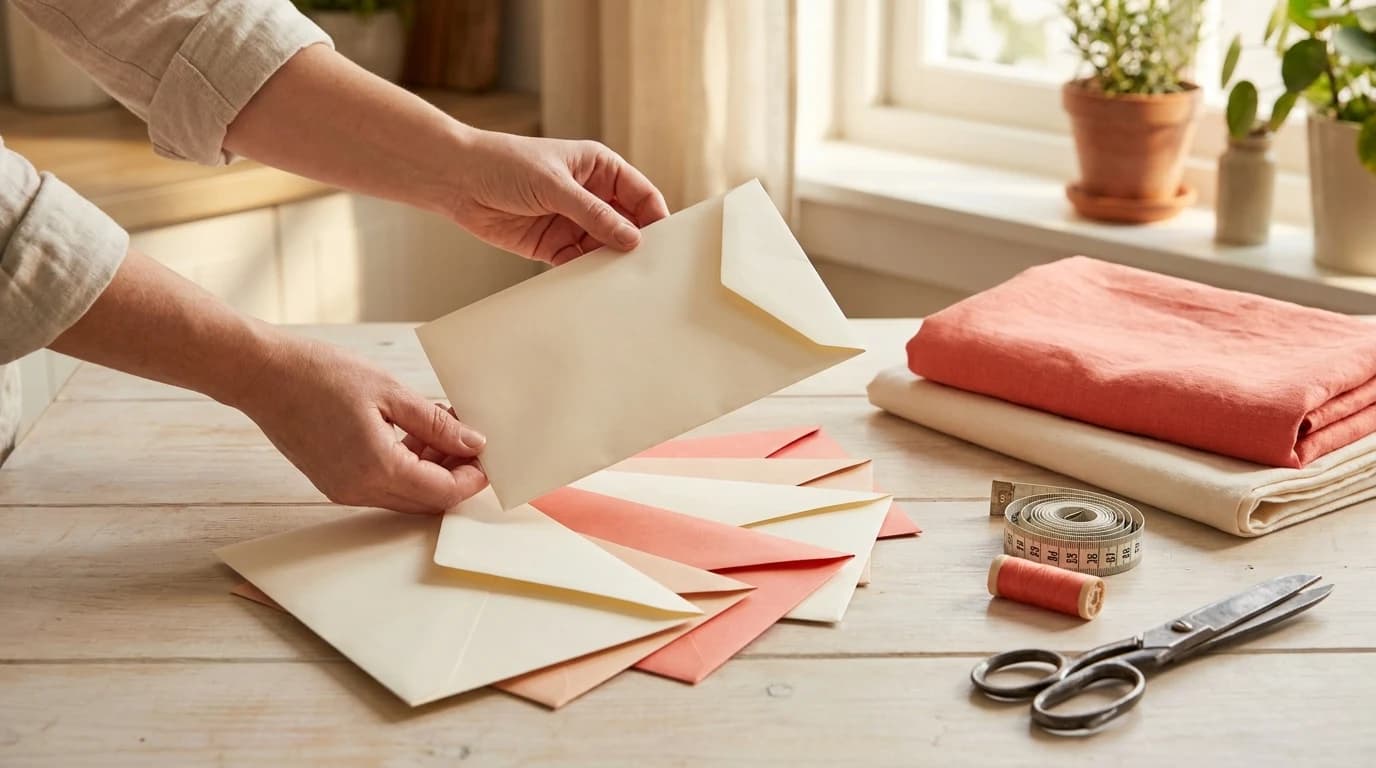
You have a machine that works, you have sewn a few rectangles, and now you are standing in front of a wall of pattern envelopes — or an indie designer's shop page — with no idea which one is a first pattern and which one is a project that will sit in a drawer for two years. The envelopes all look achievable. That is what the drawing on the front is for.
Picking well is a skill of its own, and it is separate from reading the pattern once you own it. If what you actually need is the tissue symbols, the grainline arrow and the cutting layout, that is how to read a sewing pattern. This guide is the step before: how to look at a pattern you have not bought yet and know whether it will be a good weekend or a bad one. It sits at Level 2 of The Pattern, Stitcher.
The four things a pattern can be
Patterns arrive in four formats and they are not interchangeable experiences. None is better; they are just different amounts of work before you touch fabric.
| Format | What you get | Best when | The catch |
|---|---|---|---|
| Envelope pattern (the big commercial brands) | Printed tissue, an instruction sheet, several sizes in one envelope | You want it today from a fabric shop, cheaply, often on sale | Tissue is fragile, instructions are terse, and the illustrations assume some knowledge |
| Indie PDF | A file you print at home or at a copy shop, usually with a long illustrated booklet | You want hand-holding and step photos | You do the printing and taping before you sew a stitch |
| Indie paper pattern | Sturdy printed sheets posted to you | You hate taping and want the good instructions | Costs more, and you wait for the post |
| Magazine or free pattern | A PDF from a publisher or fabric shop, single garment | You want to try a designer before paying | Instructions vary from excellent to two paragraphs |
For a first pattern, the honest ranking is: indie PDF or indie paper if you can afford it, because the instructions carry you; envelope patterns if you cannot, because they are a fraction of the price and the shapes are the same shapes.
The gear this guide assumes: a tape measure, a pencil, a pair of fabric scissors kept for fabric only, and — once you are cutting more than one pattern — a rotary cutter over a cutting mat. Borrow before you buy.
What we'd buy for this
One pick per category, chosen from the research pages linked in this piece. Borrow before you buy — nothing here is required to start.
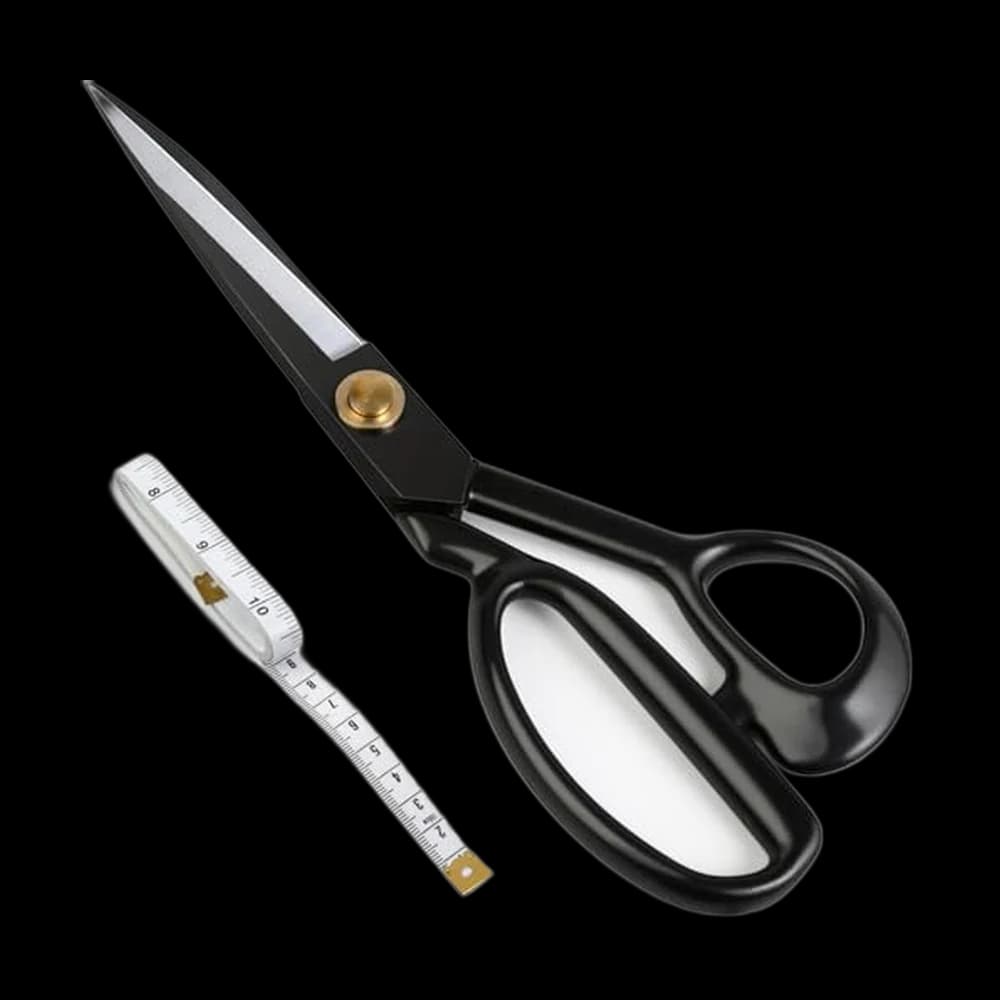 Fabric Scissors
Proshear$8.99 4.8 out of 5 stars · 4,040 ratings
The least expensive pick in this category, which makes it the low-risk way to find out whether you'll keep at it; the handles are the ergonomic style, which matters more than it sounds once you are cutting out a whole garment.
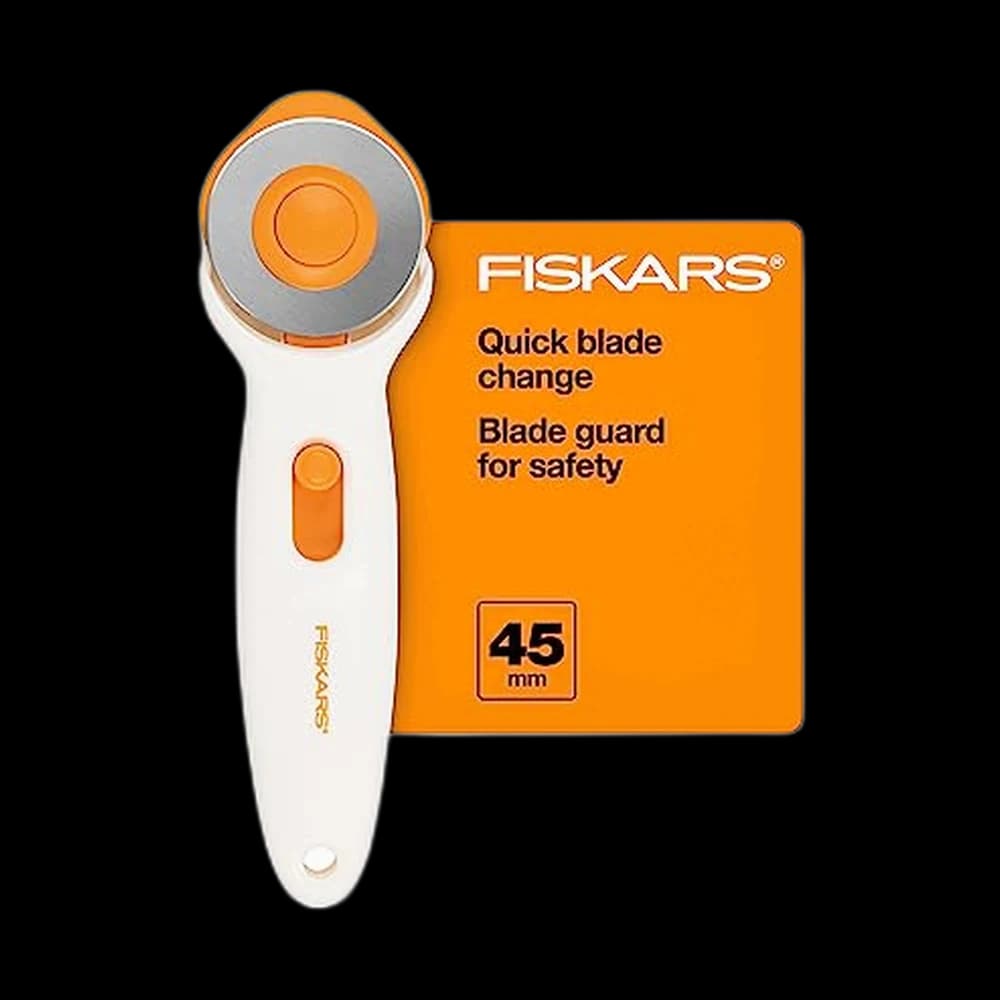 Rotary Cutters
Fiskars 45mm$10.98 4.6 out of 5 stars · 2,112 ratings
Priced in the lower half of this category.
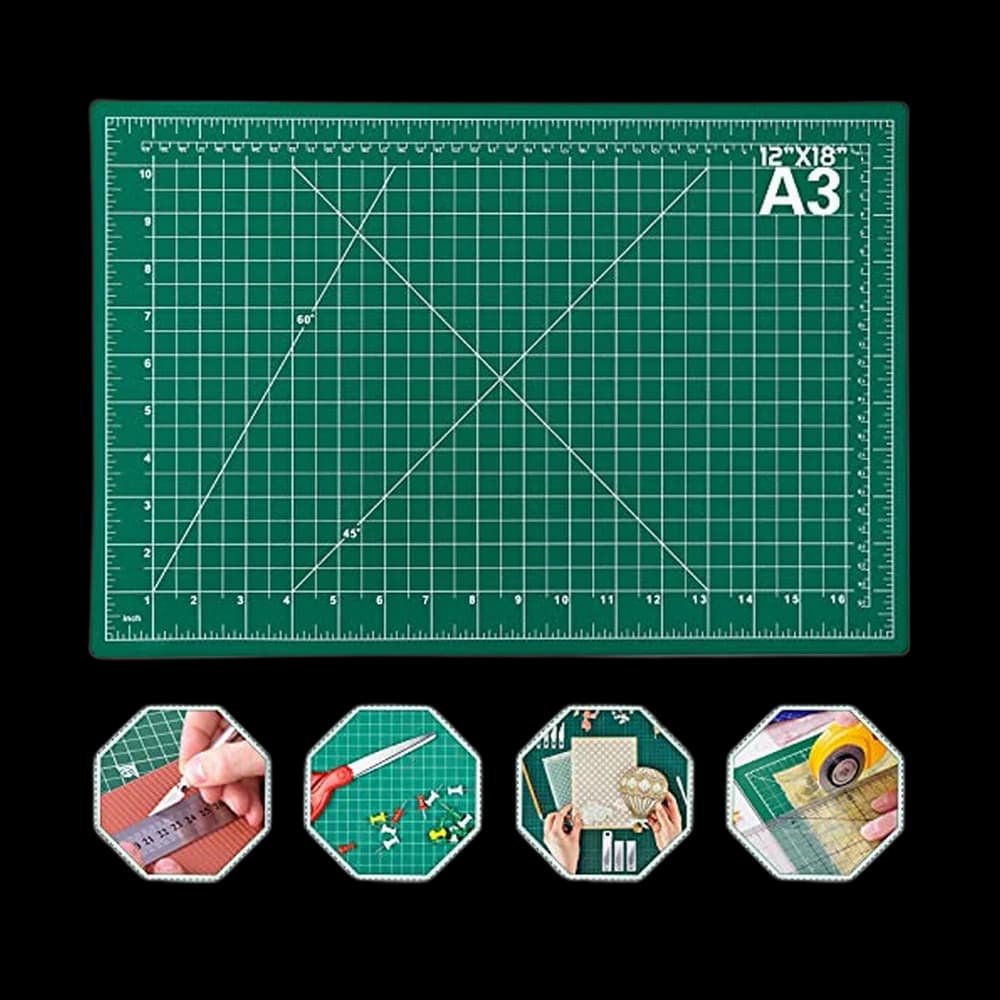 Cutting Mats
anezus 12inch$8.99 4.6 out of 5 stars · 21,006 ratings
Researched from listings, specs and owner feedback — never hands-on testing. We may earn a commission; it never changes a pick.
What the word beginner actually means on an envelope
The commercial brands print skill markings on the front — wording like Easy, Learn to Sew, or a similar house label. These are broadly honest. A pattern marked that way genuinely has fewer pieces and fewer techniques than the one next to it.
But the marking is a summary, not a spec, and you can read the spec yourself. Turn the envelope over and count. A first pattern should have:
- Six pattern pieces or fewer. Every piece is another cut, another set of notches, another seam to match.
- No set-in sleeve. A sleeve sewn into a finished armhole is the technique that separates a beginner garment from an intermediate one, and it is a real step up.
- No lining, no facings you have to understitch, no collar and stand.
- An elastic or drawstring waist rather than a fitted waistband with a zip.
- A short notions list. Thread and elastic is a good sign. Thread, an invisible zip, interfacing, six buttons and a hook and bar is a Saturday you will not enjoy yet.
Rule of thumb: if you cannot picture how a piece becomes part of the garment, that is not a reason to avoid it forever. It is a reason to make it second.
Sizing: measure yourself, every single time
This is the part that upsets people, so here it is plainly. Pattern sizes are not clothing sizes. They are a measurement code. The number on the envelope will often be two or three higher than the label in the clothes you have on, and it means nothing about you at all.
The pattern companies publish their charts openly — Simplicity's size charts and their guide to choosing your pattern size both set out how to measure and which measurement to read off. Their instruction is to measure over the underwear you normally wear, with the tape snug but not tight, and to take your bust, waist, hip and high bust.
Then pick the size the chart gives you:
| What you are making | Read your size from | Why |
|---|---|---|
| Top, blouse, dress bodice | Bust, or high bust if you are between sizes | Shoulders and armholes are the hardest area to alter later |
| Skirt or trousers | Hip | A waist takes in quickly; hips do not |
| A dress with a fitted waist | The largest of the three, blending the cutting lines between sizes | You can remove width far more easily than you can invent it |
You will very often land across two sizes. That is normal — the charts describe one proportional body and nobody is it. Cut the larger and take it in.
Ease is why the finished garment is bigger than you
The second number on the envelope back is the finished garment measurement, and it is larger than the body measurement for the same size. The gap is ease, and understanding it is the difference between a garment that fits and one that is technically your size and feels wrong.
Seamwork's explainer on understanding ease splits it the way pattern drafters do: wearing ease is the room you need to move, breathe and sit down; design ease is extra room the designer added on purpose because the garment is meant to be loose. A boxy linen shirt and a fitted shirt can be drafted for exactly the same body and have completely different finished measurements.
The practical move, before you cut: find the finished bust or hip measurement for your size, then measure a garment you already own and like the fit of, flat, across the same place, and double it. If the two numbers are close, the pattern will feel like the thing you already wear. If the pattern is six inches bigger, it is an oversized design — which may be exactly what you wanted, but now you know before the fabric is cut.
Treat the suggested fabrics line as a constraint
Somewhere on the back, in small type, is a list of suggested fabrics. Beginners read it as a hint. It is closer to a specification.
A pattern is drafted for cloth with a particular weight and drape. A shape designed for soft rayon in stiff quilting cotton stands away from the body and looks like a costume; a structured shape in something floppy collapses. When that happens, it looks like bad sewing, and it is not — it is the wrong cloth in a well-sewn garment.
For a first pattern, that line will usually say something like cotton, chambray, linen or poplin, and those are genuinely the easy ones: they hold a press, they do not slither under the presser foot, and they show you your seam line clearly. Save the satin, the chiffon and the jersey until the sewing itself is boring.
Two practical notes that go with it. Cutting a whole garment out of a slippery fabric with blunt blades is how the edges distort before you have sewn anything — a pair of fabric scissors kept for fabric only is the cheapest accuracy upgrade there is, and for long straight edges a rotary cutter over a cutting mat is faster and more accurate than scissors will ever be. And match the machine needle to the cloth: a ballpoint or stretch needle for anything knitted, a sharp for wovens, a heavier one for denim and canvas.
PDF or paper: what you are actually choosing between
A PDF pattern is not a lesser pattern. It is the same drafting with the printing job handed to you, and there are two ways to do that printing.
Print at home on letter or A4 paper. You get twenty to fifty pages, you trim the margins, and you tape them into one big sheet following the printed grid. It costs almost nothing and takes about an hour. The one rule that matters: your printer must be set to print at 100 percent, actual size, with any scale-to-fit option off, and every good pattern includes a test square you measure with a ruler before you tape anything. Get that wrong and the whole pattern is quietly the wrong size.
Send the copyshop file to a print shop. Most PDF patterns include a second file drawn on one enormous sheet, so there is no taping at all. Helen's Closet has a useful rundown of where to get A0 and copyshop files printed, including what the two sheet sizes actually are — copyshop paper is 36 by 46 inches, A0 is roughly 33 by 47 inches — and what shops charge, which they list in the low single digits per sheet in most countries. For a multi-piece garment that is money well spent.
Many PDF patterns are also layered, which means you can switch off every size except yours in a PDF reader before printing. If your pattern offers it, use it. Tracing one clean line is much easier than picking your line out of eight nested ones.
Where free patterns are legitimate
Free is not a red flag. There are publishers and fabric shops who give away properly drafted, properly graded patterns as marketing, and they are a genuinely good place to start.
- Fabric retailers. Mood Fabrics publishes a large library of free sewing patterns as PDFs.
- Magazines. Peppermint releases free patterns designed by indie designers through its sewing school pages.
- The designer's own site. Plenty of indie pattern companies give away one simple pattern to introduce you to their instructions and their fit.
What to be wary of is the other kind of free: a PDF of a commercial pattern uploaded to a file-sharing site or a random blog. Those are copies, the scale is often wrong because the file has been through a printer twice, and the instruction booklet is usually missing. A free pattern from the people who drafted it is a gift. A free pattern from someone who did not draft it is a broken tool.
Free patterns tend to come with lighter instructions, so pair them with a written walkthrough — for a first garment, that is worth paying for once.
Your first three patterns, in order
You do not need a plan for the next year. You need the next three.
- A bag or an apron with no fitting at all. The café apron is the classic version: straight edges, ties, patch pockets, and nothing that has to fit a body. You learn to read a layout and cut accurately with zero fit risk. The tote bag works the same way if you would rather make a bag.
- An elastic-waist garment. PJ shorts are the honest first pattern — a real garment, real pattern pieces, but the waistband is elastic so nothing has to be measured perfectly. This is where pattern reading stops being theoretical.
- Something with actual fit, but forgiving fit. A wrap skirt ties to your own body, so it fits whatever you made rather than what the chart predicted. That is the gentlest possible introduction to fitting, and it is the doorway into Level 3, Maker.
After that, patterns stop being intimidating and start being a catalogue. If you want the full ordered run of what to make from your very first stitch onwards, that is the beginner project roadmap, and the whole free curriculum lives at The Pattern.
Your first pattern garment will have something wrong with it. A hem that wanders, a waistband that twists, a seam you sewed twice. Wear it anyway. Wonky seams are the whole point, and the second one will be visibly better than the first — which is the only progress report that has ever mattered in sewing.
Patterns are cheap. Cutting them accurately is what costs.
Frequently asked
What size sewing pattern should I buy?
Measure your bust, waist and hip with a tape held snug but not tight, then read your size off the chart on the pattern envelope or the designer's site. Never buy by your ready-to-wear size, because pattern sizing is a measurement code and often lands two or three sizes higher. If you fall between sizes, cut the larger one and take the seams in.
Are commercial envelope patterns or indie PDF patterns better for a beginner?
Indie patterns usually have far more detailed instructions, often a full illustrated booklet, which is worth a lot on your first garment. Commercial envelope patterns are much cheaper and frequently on sale, and the garment shapes are the same shapes. If money is tight, buy the envelope pattern and pair it with a written walkthrough.
What does ease mean on a sewing pattern?
Ease is the difference between the body measurement for your size and the finished garment measurement printed alongside it. Wearing ease is the room you need to move and breathe; design ease is extra fullness the designer added on purpose. Comparing the finished measurement against a garment you already own tells you how the pattern will actually feel.
How do I print a PDF sewing pattern correctly?
Set your printer to actual size or 100 percent and switch off any fit-to-page or scale-to-fit option, then print the first page only and measure the test square with a ruler before printing the rest. If the pattern includes a copyshop or A0 file, sending that to a print shop gives you the whole pattern on one sheet with no taping at all.
Are free sewing patterns any good?
Free patterns published by fabric retailers, sewing magazines and the pattern designers themselves are properly drafted and graded, and they are a good way to try a designer before paying. Avoid scanned copies of commercial patterns posted on file-sharing sites — the scale is often wrong and the instructions are usually missing.
Which pattern should I make first?
Something with no fitting at all, like an apron or a tote bag, so you can practise reading a cutting layout without any fit risk. Then an elastic-waist garment such as pyjama shorts, which is a real pattern with real pieces but nothing that must be measured perfectly. A wrap skirt is a gentle third step because it ties to your body.
Prices and StitchScores reflect our most recent research and refresh on a cycle — confirm the live price before buying. We may earn a commission from affiliate retailers; it never changes what we recommend. See how we score gear.
Read next
How to Read a Sewing Pattern (Envelope to First Cut)
Decode a sewing pattern envelope, instruction sheet and tissue symbols — grainline, notches, darts and seam allowance — right through to your first cut.
Machine Embroidery for Beginners: What the Machine Does
How machine embroidery actually works: hooping, stabilizer, file formats, thread and needles, what a 4-inch hoop really limits, and what to make first.