Beginner Sewing Kit: The 5 Essentials
Our picks, at a glance
- Top pick
Coats & Clark Dual Duty Thread, Black & White
$8.50StitchScore 82 4.7 out of 5 stars · 4,705 ratings
- #2
Proshear Professional Tailor Scissors, 9 Inch Heavy Duty Fabric Shears
$8.99StitchScore 93 4.8 out of 5 stars · 4,040 ratings
- #4
jekiinova 30 Pack Hand Sewing Needles, 6 Sizes
$3.99StitchScore 87 4.7 out of 5 stars · 2,011 ratings
- #5
DTDNZKN 300PCS Sewing Pins with Glass Ball Heads
$3.99StitchScore 83 4.6 out of 5 stars · 530 ratings
The short version
- The complete kit is five different supplies: thread, fabric scissors, a seam ripper, hand needles and straight pins.
- The five current catalog prices totaled $29.46 on October 9, 2026, before tax or shipping; confirm each live listing.
- Buy all-purpose polyester thread in one or two colours before you buy a rainbow assortment.
- Keep fabric scissors for fabric; paper and tape dull the cutting edge.
- A seam ripper makes corrections routine, while assorted needles and straight pins cover first hand-sewn repairs and practice.
- Giving it as a gift? Add a pincushion and a box to keep it in, and skip the surprise sewing machine.
- No sewing machine, rotary cutting system, dress form or storage organiser is required to begin.
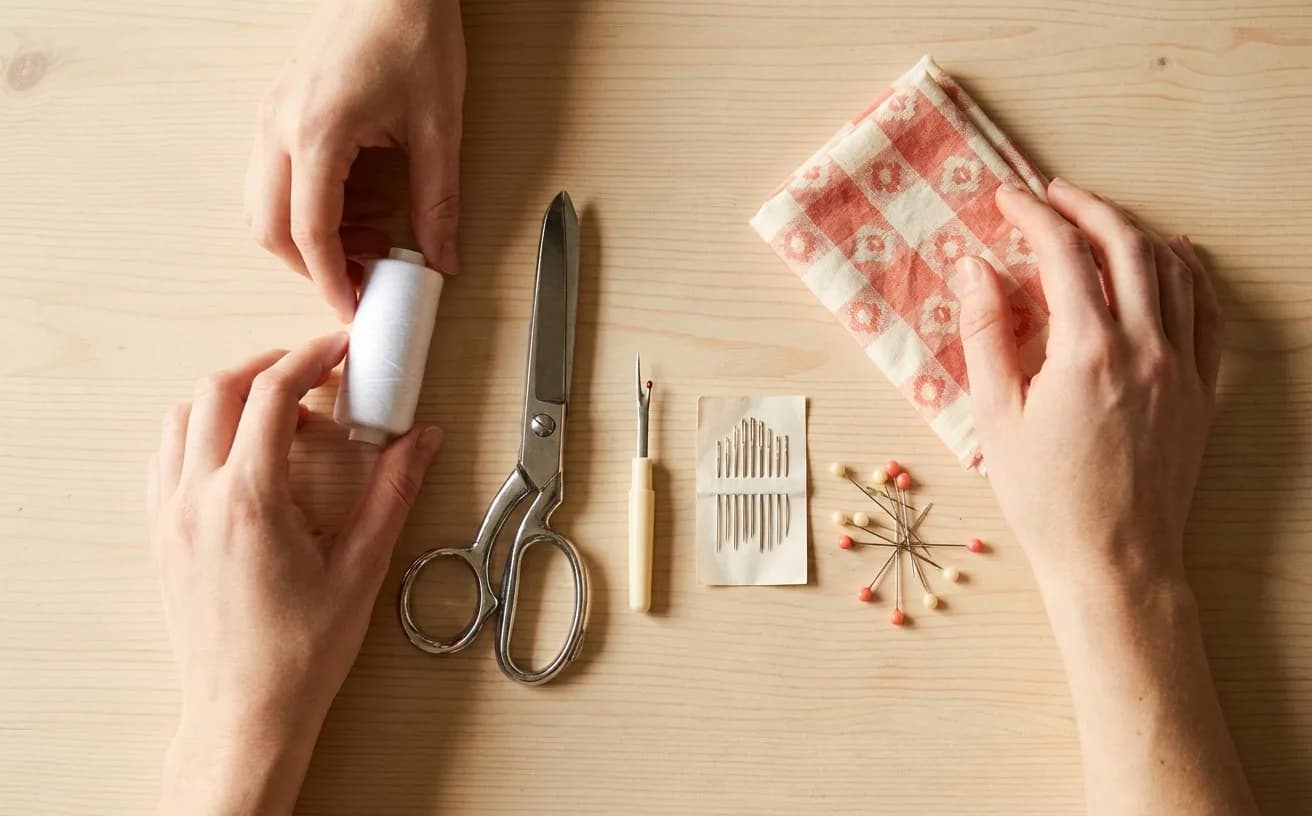
If you own nothing at all, the honest answer to "what do I need to start sewing" is five small supplies that fit in a shoebox and cost about $30 in our current catalog. No machine, cutting table, dress form or rotary system is required. With them you can practise stitches, repair a hem and put a button back on a coat this weekend.
That is the whole idea behind Level 0 of The Pattern — Curious. You sew by hand first, with almost nothing, because the fastest way to find out whether you enjoy sewing is to finish something small rather than to shop for six weeks.
How we got these picks: each product below is a visible, positively checked listing in our catalog. We use manufacturer listing details and measured owner feedback; we do not claim hands-on testing. Prices were re-checked October 9, 2026.
The kit, item by item
| What | Exact pick | Checked price |
|---|---|---|
| All-purpose thread | Coats & Clark Dual Duty, black-and-white 2-pack | $8.50 |
| Fabric scissors | Proshear 9-inch tailor scissors | $8.99 |
| Seam ripper | Ortarco seam-ripper and thread-remover kit | $3.99 |
| Hand needles | JekiiNova 30-needle assortment in six sizes | $3.99 |
| Straight pins | DTDNZKN 300 straight pins | $3.99 |
The five prices total $29.46. That is a dated Amazon catalog snapshot, not a single bundle or a guaranteed cart total. Tax and shipping are excluded. Each row is a separate listing, so confirm its current price and availability. The comparison table above now shows five different supplies rather than five versions of thread.
Thread: one good spool beats thirty bad ones
Thread is the part beginners get wrong in the most expensive direction. The instinct is to buy a rainbow. The useful move is to buy all-purpose polyester in the one or two colours your first projects actually need, because:
- polyester has a little give in it;
- it sews on almost everything a beginner touches;
- it does not snap when a seam is pulled.
The starting pick
Our starting pick is the Coats & Clark Dual Duty All-Purpose 2-pack: one black spool and one white spool, 400 yards each according to the listing. It is in our thread category, and that is a genuinely large amount of sewing for someone at the beginning. Start with those neutrals and stop there.
If you want colour from day one
| Option | Why you would pick it |
|---|---|
| VIZOSHI thread kit | Colour variety with prewound bobbins; useful only after you confirm the bobbins fit your machine |
| Eoehro 72-piece kit | Broad colour variety for small repairs rather than long seams in one colour |
| Coats & Clark all-purpose 6-pack | More full spools while staying with all-purpose polyester |
| Gütermann Sew-All set of 20 | A broad set to consider after you know which colours you use |
Kits like these trade yardage per colour for variety: you get a little of everything rather than a lot of one thing, which suits mending and small projects and does not suit sewing a whole garment in one colour.
Rule of thumb: thread is the one supply where you want a small amount of the right thing, not a large amount of the cheap thing. Old thread from a relative's sewing box is the exception to buy your way out of — it goes brittle and snaps mid-seam.
What we'd buy for this
One pick per category, chosen from the research pages linked in this piece. Borrow before you buy — nothing here is required to start.
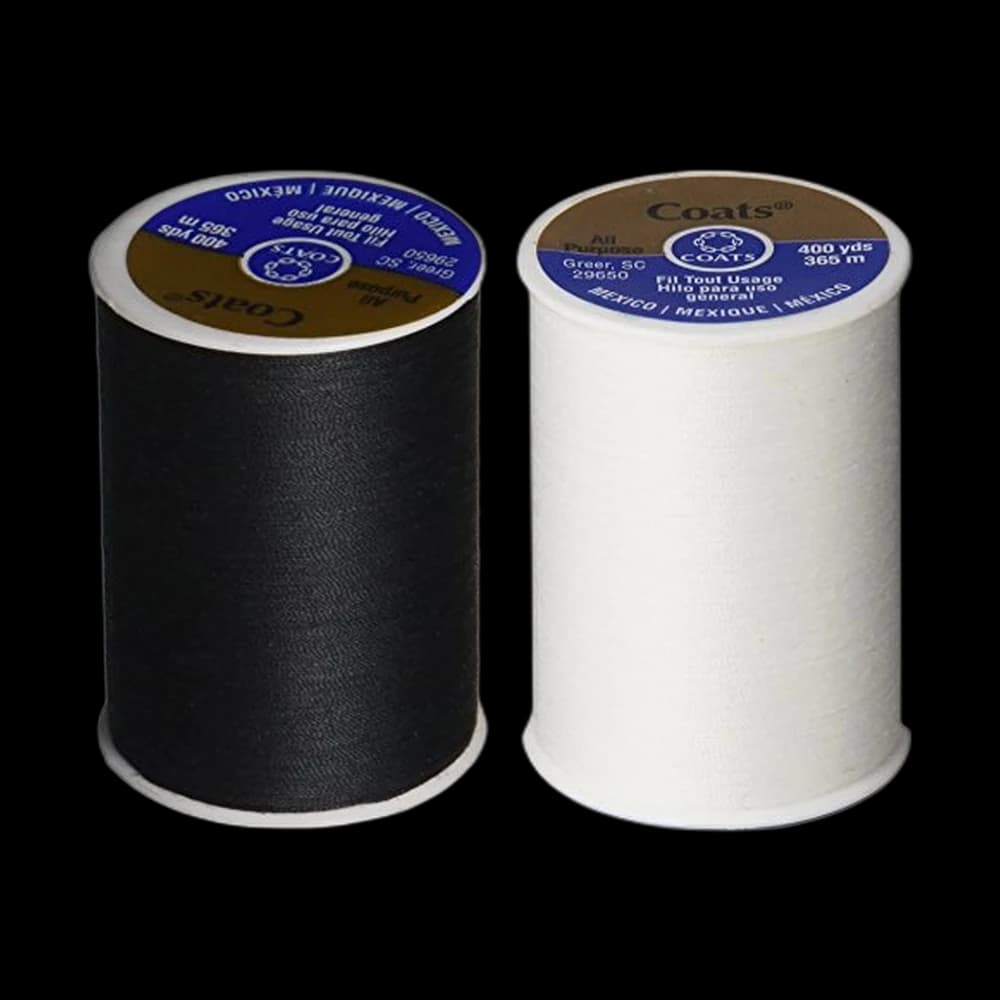 Thread
Coats & Clark thread$8.50 4.7 out of 5 stars · 4,705 ratings
The least expensive pick in this category, which makes it the low-risk way to find out whether you'll keep at it; all-purpose polyester, which covers nearly everything a beginner sews.
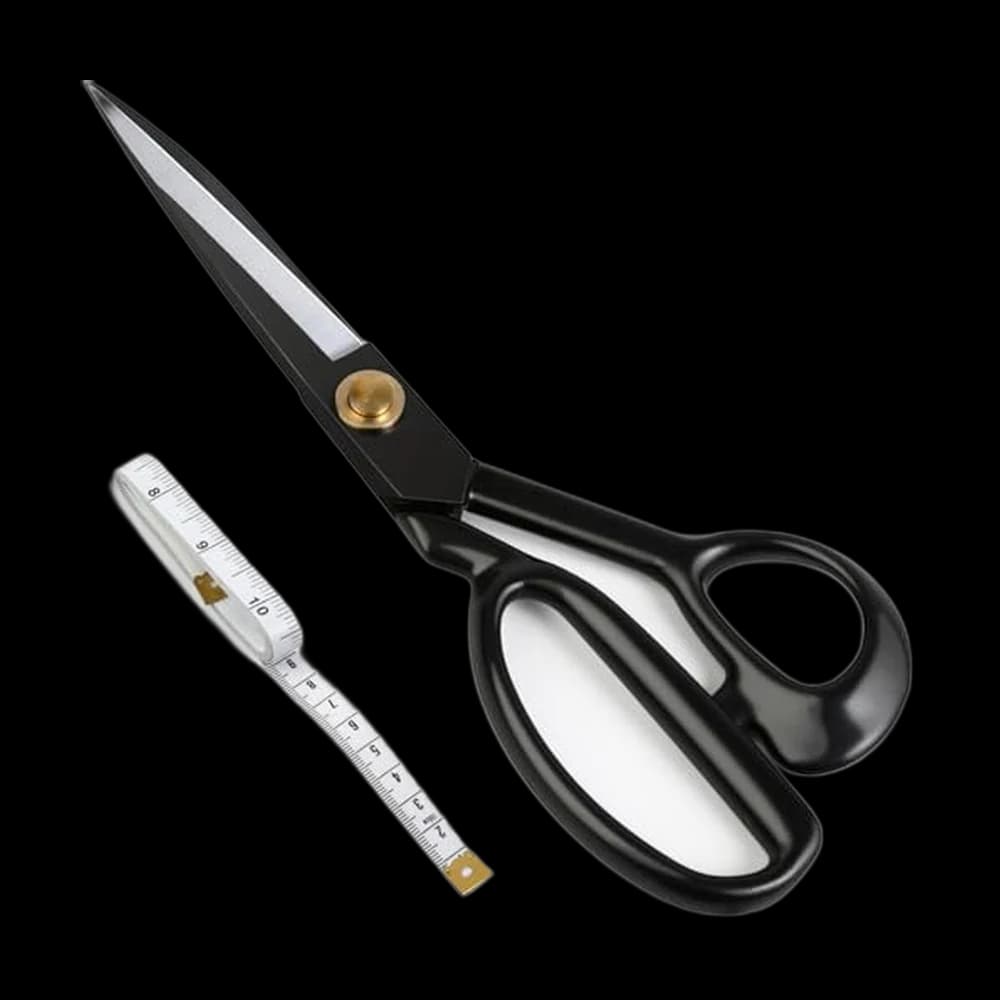 Fabric Scissors
Proshear$8.99 4.8 out of 5 stars · 4,040 ratings
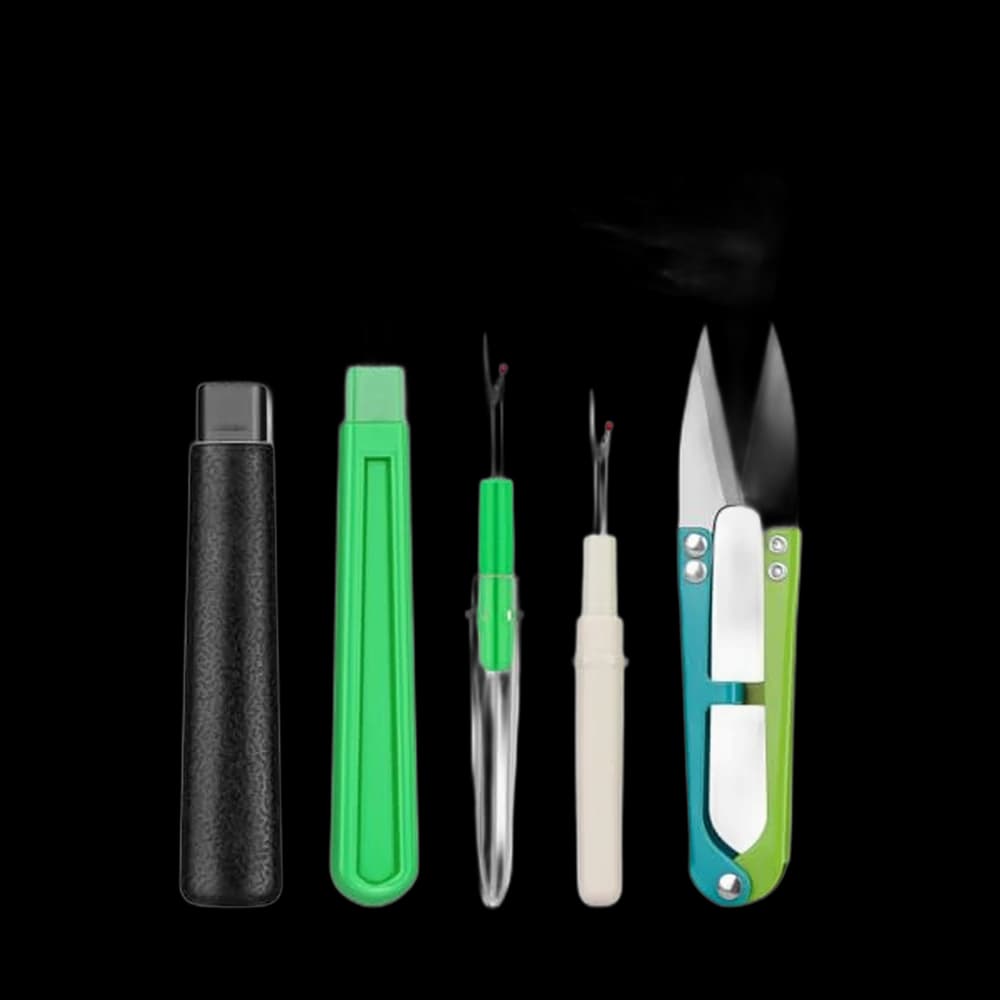
Researched from listings, specs and owner feedback — never hands-on testing. We may earn a commission; it never changes a pick.
Fabric scissors: the tool nobody else in the house may touch
This is the single most important object in the kit, and the rule attached to it is the oldest rule in sewing: fabric scissors cut fabric and nothing else. Paper dulls a blade faster than anything, and a dull blade chews fabric instead of cutting it, which shows up as a wobbly, stretched edge before you have sewn a stitch.
What to buy, and what to want later
- Proshear 9-inch tailor scissors are the exact kit pick in our fabric scissors category. The listing specifies high-carbon steel blades, a bent handle and a rubberized grip.
- Wteehn 8-inch and LIVINGO 9.5-inch are alternatives with different handle shapes. If you can hold scissors before buying, choose what fits your hand.
- Gingher dressmaker shears are a later upgrade, after you know you are staying.
Label your scissors. Tie a ribbon on the handle. Whatever it takes.
The seam ripper: you will use it more than anything else
A seam ripper is a small hooked blade for taking stitches back out, and the reason it matters so much at the start is psychological rather than technical. Beginners think unpicking a seam is failure. It is not — it is the normal, expected, everyday motion of sewing.
Wonky seams are the whole point of learning. The ripper is what makes them cheap to fix.
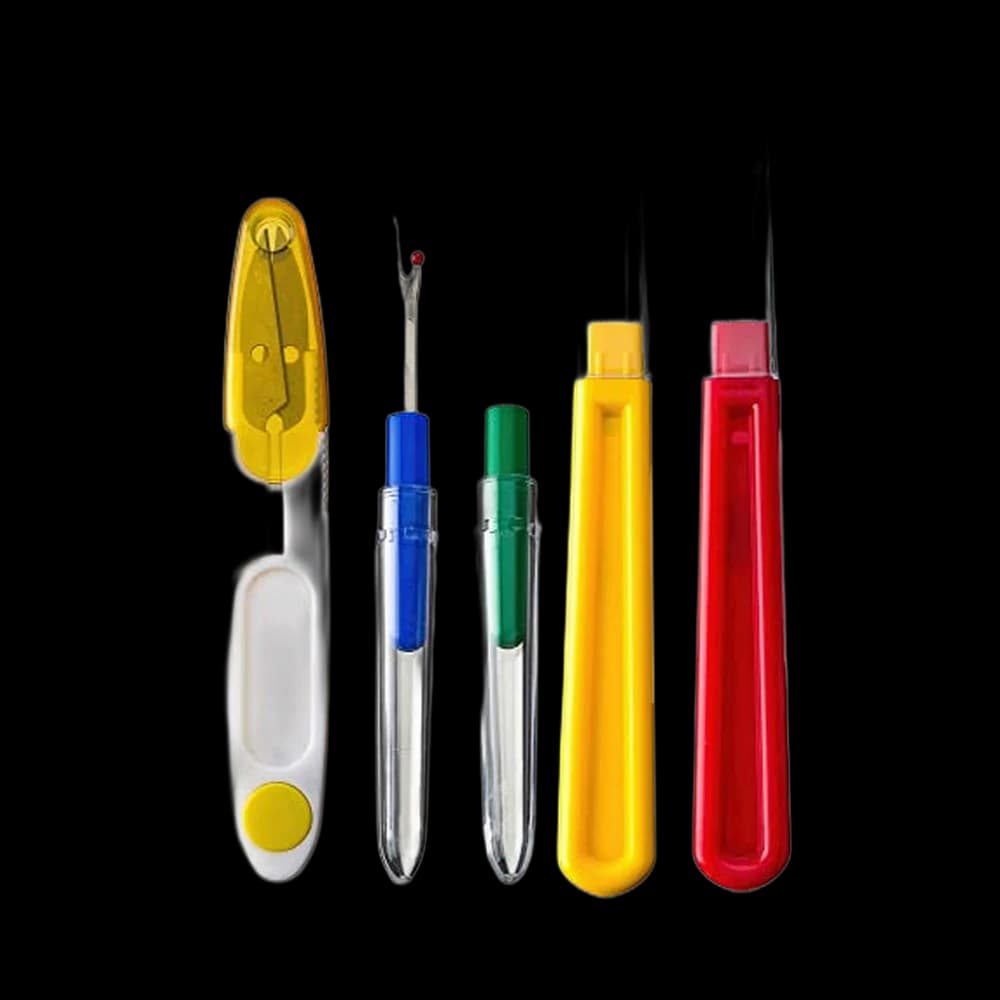
- Ortarco's seam ripper and thread-remover kit is the exact kit pick. Its listing specifies two large and two small rippers plus thread snips. Compare it with the other current seam rippers.
Buy a set, not a single, and keep one wherever you sew.
Hand needles and pins: the last few dollars
Needles
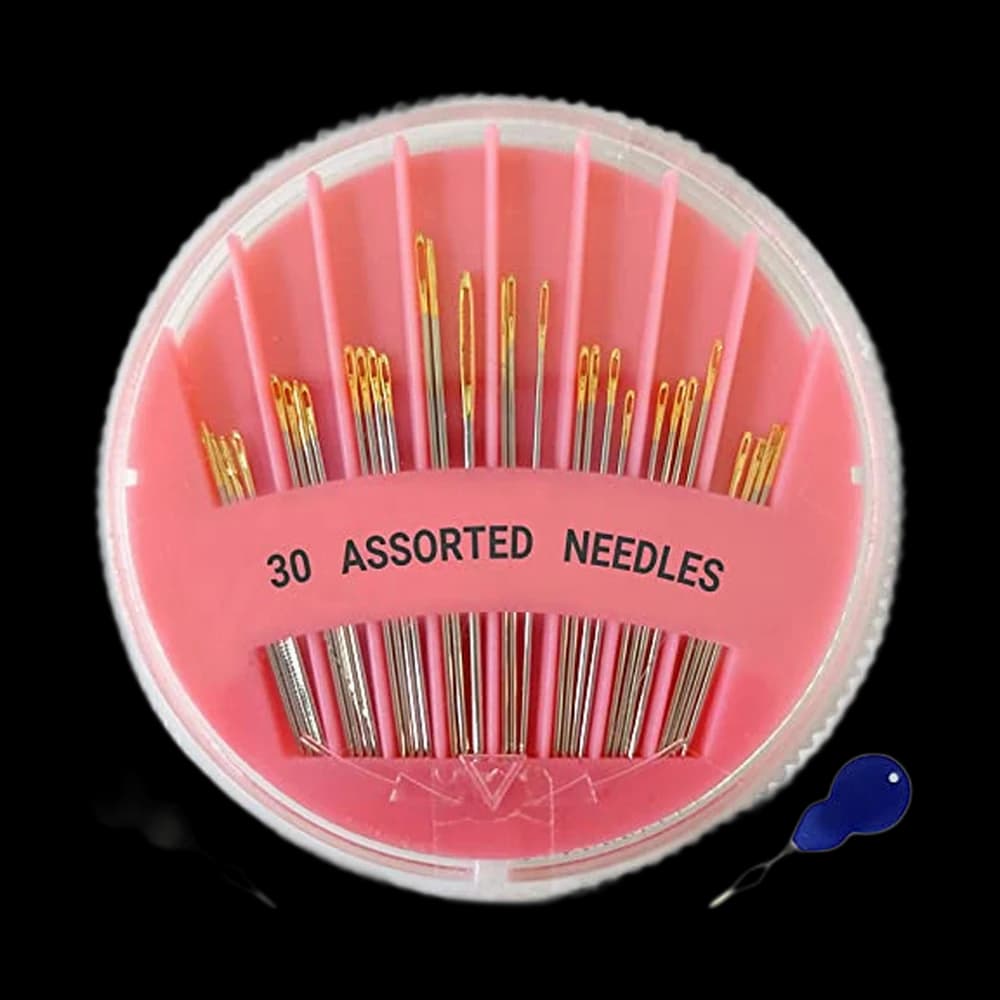
At Level 0 the needle is your machine. The selected JekiiNova pack contains 30 hand-sewing needles in six listed lengths, plus two needle threaders. That covers the practice in basic hand-sewing stitches and sewing on a button. If a needle fights the fabric, change size rather than forcing it.
Pins
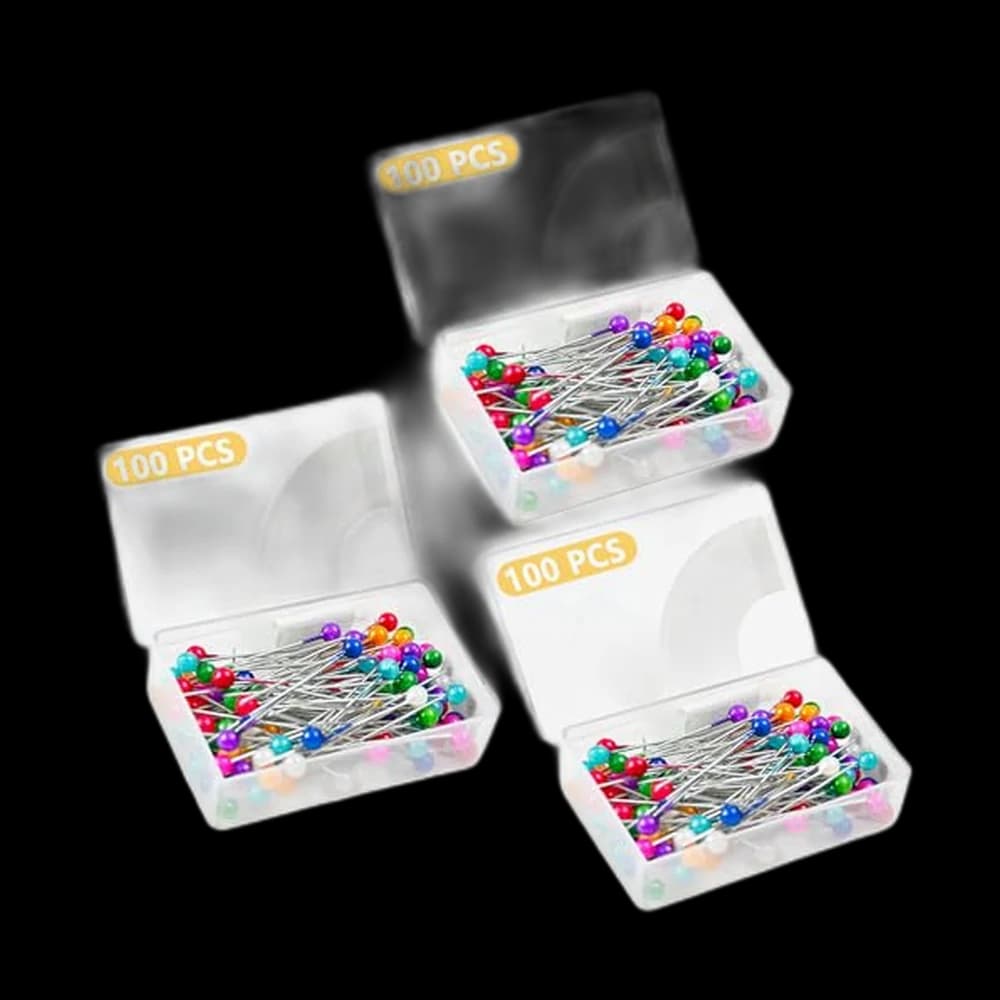
Pins hold two pieces of fabric together while you sew them, which sounds obvious until the first time you try to sew a seam without them and watch the layers walk apart. The selected straight-pin pack lists 300 coloured-head pins in three storage boxes. Its title and feature copy disagree about the head material, so keep the iron away from them. Sew slowly and remove each pin before the needle reaches it.
What NOT to buy yet
This part saves more money than any pick above.
- A sewing machine. Not yet. Hand sew three small things first. If you still want to keep going, our guide to the best beginner sewing machines under $250 and the sewing machine category are waiting for you, and the Machine Finder narrows the shelf to three in about a minute.
- A rotary cutter, mat and ruler. This is a real system, and it earns its place when you start cutting repeated shapes — quilting, mostly. Until then it is three purchases replacing one pair of scissors. Bookmark rotary cutters and move on.
- A dress form. It is the most photogenic object in sewing and the least useful early one. Dress forms matter when you are fitting garments to a body, which is a long way past your first hem.
- A serger, an embroidery machine, or anything with a screen. Every one of these is a second machine for someone who already has a first.
- A rainbow of thread. Buy colours for projects you have chosen, not for a future shelf.
Where to keep it
A shoebox works. It genuinely does — the point of the box is that everything lives in one place, so starting takes ten seconds rather than ten minutes of hunting for the ripper. When the kit outgrows the box, a divided craft organiser is the upgrade that stops the small metal things migrating. Compare the current options in our storage category when that problem arrives.
Do not buy the box before the tools. A tidy empty box has never sewn anything.
Giving it as a gift
The five supplies above can make a better present than a big boxed sewing kit, because every item is one a beginner actually uses in the first hour. A few additions turn it from a shopping list into a gift; a few popular ones are better left on the shelf.
What to add
| Add-on | Why it earns a place | Catalog pick | Checked price |
|---|---|---|---|
| A pincushion | Somewhere for pins that is not the arm of the sofa | Dritz tomato pincushion | $5.47 |
| Sewing clips | Hold thick or slippery layers where pins struggle | Mumcraft clips, pack of 100 | $5.69 |
| A box to keep it in | Turns five loose items into a kit that lives on a shelf | WEWLINE 13-inch organizer box | $25.99 |
| More thread colours | For someone who already mends and wants to match more than black and white | Eoehro 72-piece thread kit | $13.89 |
Those gift-extra prices were checked October 9, 2026, and move like any other listing. The box is the one exception to the "tools before the box" rule further up: in a gift the box arrives full.
What not to buy as a gift
- A surprise sewing machine. Unless they have asked for one. Dials versus a screen is a personal choice, and the kit is how someone finds out whether they want a machine at all. If they are already sure, our top pick is in the beginner machine guide.
- A boxed kit sold on its piece count. Big numbers are mostly pins, buttons and safety pins. Check that the five supplies above are inside, and that the scissors are a real pair, before paying for the count.
- A rotary cutter on its own. It is a very sharp blade that needs a mat and a ruler to be safe and useful: three purchases for someone who has not sewn a seam yet.
The gift-ready checklist
- Thread: the black and white pair.
- Fabric scissors, with a ribbon tied on the handle so everyone knows they are for fabric only.
- A seam ripper.
- Hand needles, threaders included.
- Straight pins and a pincushion.
- A box or tin to hold all of it.
- A note saying where to start. The Pattern is free, its first level needs nothing but this box, and sewing on a button or a felt keyring makes a good first evening.
Order early. These are separate listings, and they can arrive on different days.
Your first hour with the kit
- Thread a needle. Knot the end.
- Sew a running stitch along a scrap of an old shirt.
- Sew a backstitch beside it.
- Unpick both with the ripper on purpose, so the ripper stops being frightening.
That is the whole Level 0 syllabus in miniature — the rest of it is in Curious, and the full curriculum lives at The Pattern.
You now have a complete first sewing kit, and every item has a job in the first hour.
Kit sorted. The machine is the next decision, and it is a smaller one than it looks.
Frequently asked
What do I actually need to start sewing if I own nothing?
All-purpose polyester thread, dedicated fabric scissors, a seam ripper, assorted hand-sewing needles and straight pins. Those five supplies cover practice stitches, simple mending, hems and buttons.
How much does this beginner sewing kit cost?
The five catalog picks totaled $29.46 when checked October 9, 2026, before tax or shipping. They are five separate Amazon listings, not one bundled cart, and prices can change.
Do I need a sewing machine to start?
No. Hand sewing teaches how stitches and thread tension behave, and it lets you finish useful repairs before choosing a machine.
Why cannot I use my kitchen scissors on fabric?
Household scissors often cut paper and tape, which dulls their edges. A dull blade drags and stretches fabric, so keep one sharp pair for fabric.
What colour thread should I buy first?
Start with black and white or with the neutral closest to your first repair. A few useful colours beat a large assortment you may not use.
Is a beginner sewing kit a good gift?
Yes, if it holds the supplies a beginner uses in the first hour rather than a large piece count. Give the five essentials, add a pincushion and a box to keep them in, and include a note pointing to a first lesson. Leave out a surprise sewing machine unless they have asked for one, because a machine is a personal choice.
Did you test these products?
No. We research manufacturer listings, published specifications and owner-feedback patterns. The product and price claims here come from the site's checked catalog.
Prices and StitchScores reflect our most recent research and refresh on a cycle — confirm the live price before buying. We may earn a commission from affiliate retailers; it never changes what we recommend. See how we score gear.
Read next
How to Sew on a Button (by Hand): Flat and Shank
Sewing a button back on with a needle, thread and scissors — flat and shank buttons, the doubled-thread rule, and the thread shank coats need.
6 Basic Hand Sewing Stitches Every Beginner Needs
The six hand stitches that cover almost every repair and first project: running, back, whip, slip, blanket and basting — plus the mistake each one hides.