Serger vs Sewing Machine: What Beginners Actually Need
Our picks, at a glance
- Top pick
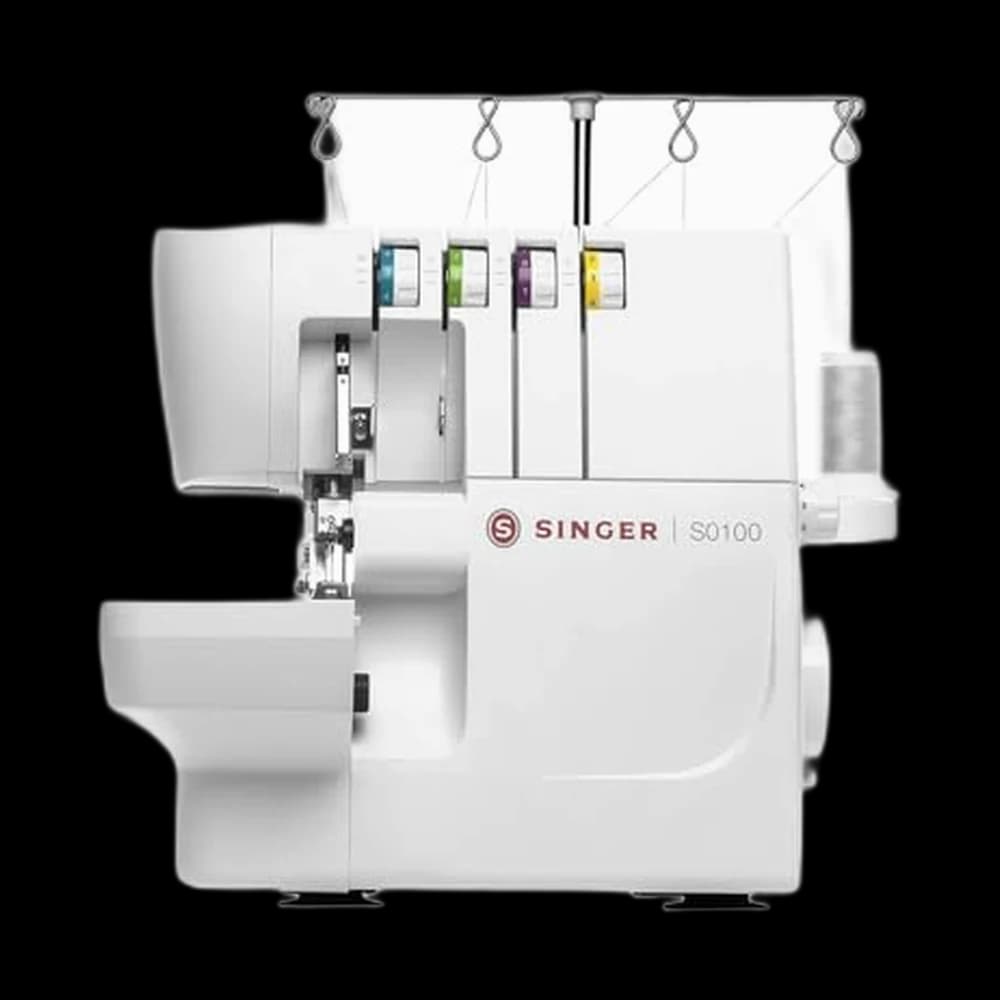
SINGER S0100 High Speed Serger, 2-3-4 Thread
$262.99StitchScore 69 4.3 out of 5 stars · 877 ratings
- #3
Brother 1034D Serger Overlock Sewing Machine
$319.99StitchScore 67 4.2 out of 5 stars · 12,166 ratings
The short version
- A serger does three jobs in one pass: trims the raw edge, sews the seam, and wraps the edge so it cannot fray.
- It cannot sew zippers, buttonholes, topstitching, or anything away from an edge — which is why it is never a first machine.
- Differential feed is the real reason knit sewers want one; it stops seams coming out wavy.
- Buy one when you sew a lot of knits, sell what you make, or have finished enough projects to be bored of finishing them.
- The SINGER S0100 at about $254 is the least expensive way to find out whether serging sticks; the SewLaVie 360 at about $270 solves the threading problem instead.
- If you want one name to start with, the Brother 1034D has by far the deepest owner-review record of these four and a 5-year limited parts warranty.
- Sergers sit at Level 3 in The Pattern — buy the sewing machine first and the serger much later.
A serger looks like the machine that will finally make your sewing look shop-bought, and in one narrow way it is. It also cannot sew a zipper, topstitch a hem, make a buttonhole, or do a single one of the things your first ten projects need. That is the whole answer, and everything below is why.
The short version: a serger is a second machine.
- If you own nothing yet, buy a sewing machine — a serger bought first will sit unused, because there is almost nothing you can make with only a serger.
- If you already sew, and most of what you sew is knit, a serger is one of the few purchases that genuinely changes how fast you finish things.
What is a serger?
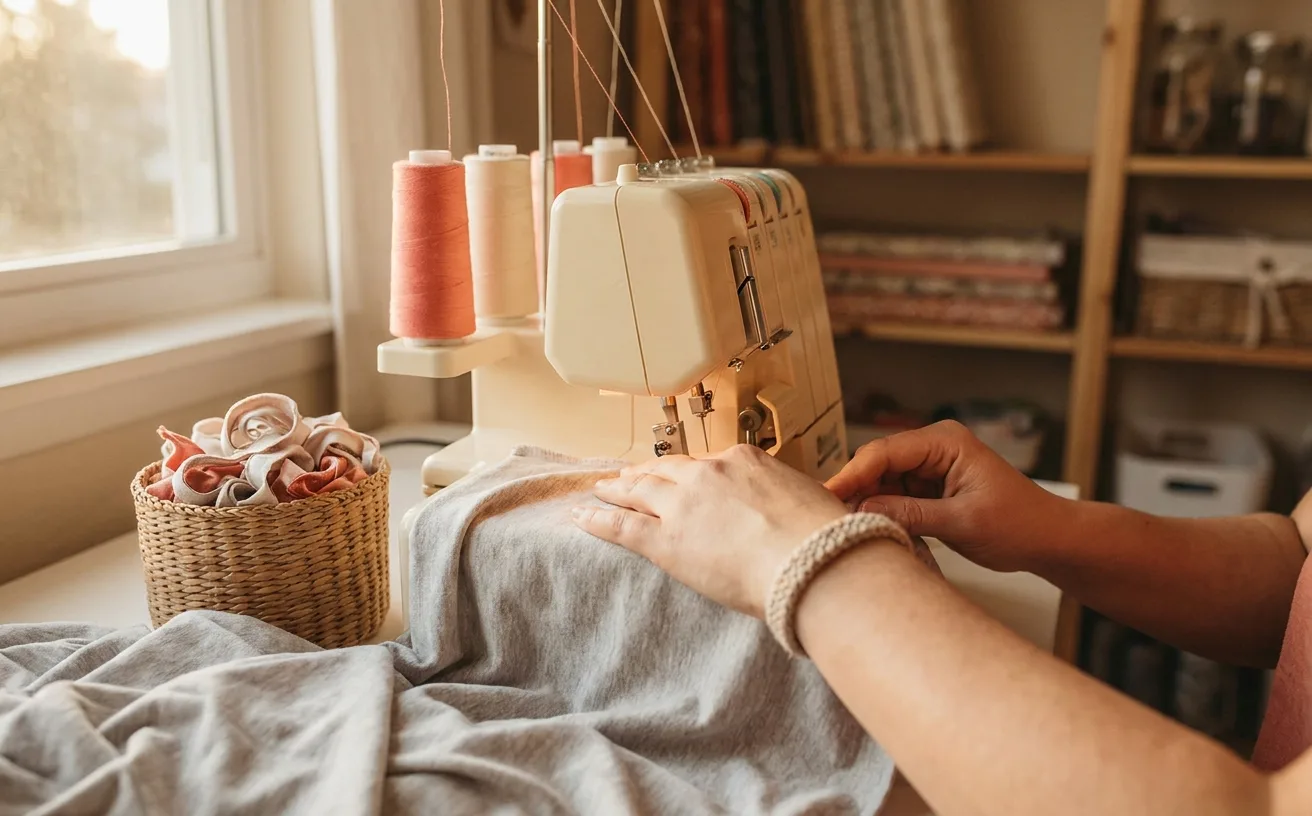
A serger is a sewing machine built for one job: finishing a seam. Outside North America it is called an overlocker. It runs two, three or four threads at once — fed from cones rather than wound onto a bobbin — and it trims the raw edge of the fabric, sews the seam and wraps that cut edge in thread loops in a single pass. The stitch it makes is the one on the inside of almost every t-shirt you own.
What a serger is not is a replacement for a sewing machine. It has no bobbin, it cannot stitch in the middle of a piece of fabric because its blade is always cutting the edge it sews, and it cannot make a buttonhole, set a zipper or topstitch a hem. That is the whole reason it is described here as a second machine rather than a first one: it makes seams you already know how to sew look and last better, and it makes sewing knit fabric far less frustrating. If you own nothing yet, a sewing machine comes first and a serger comes later.
What we'd buy for this
One pick per category, chosen from the research pages linked in this piece. Borrow before you buy — nothing here is required to start.
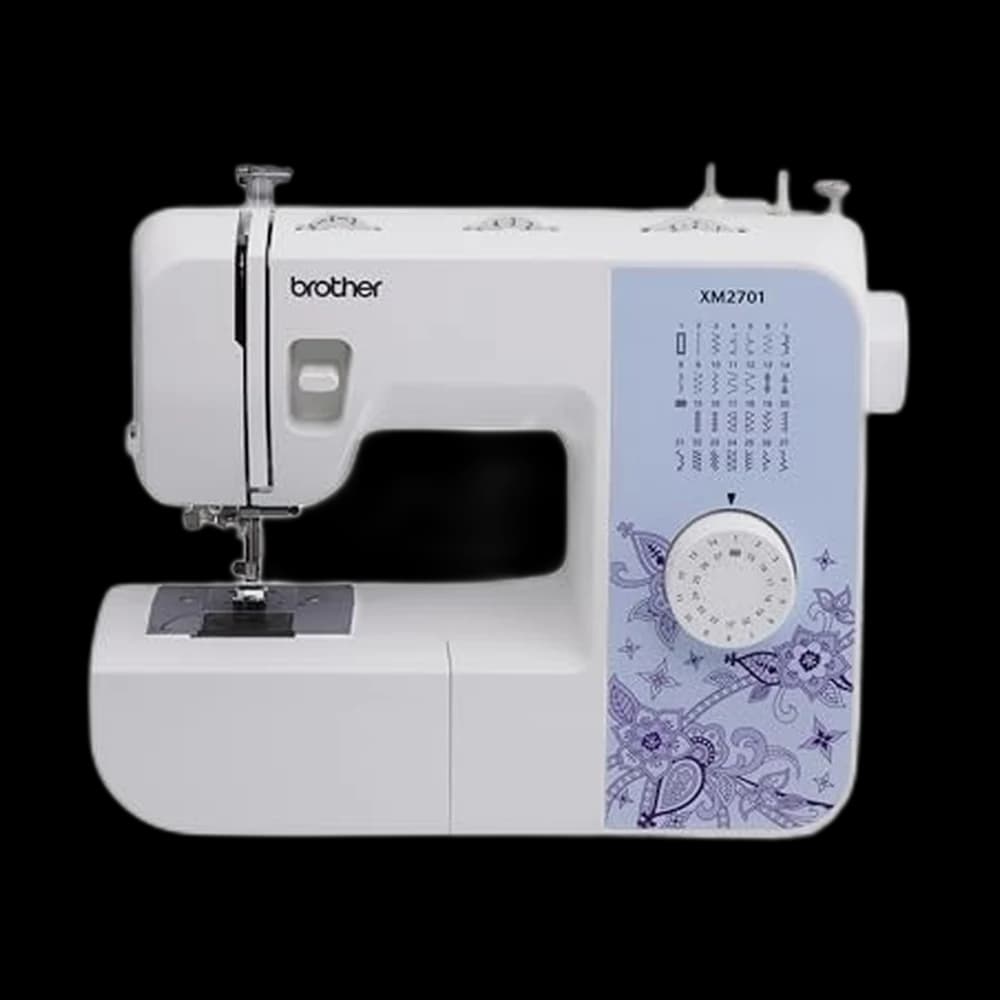 Sewing Machines
Brother XM2701$143.14 4.6 out of 5 stars · 19,162 ratings
A first machine — 27 built-in stitches is enough to sew clothes without a menu to decode, and the listing specifies the automatic needle threader and the jam-resistant drop-in top bobbin, which are the two steps beginners most often give up on.
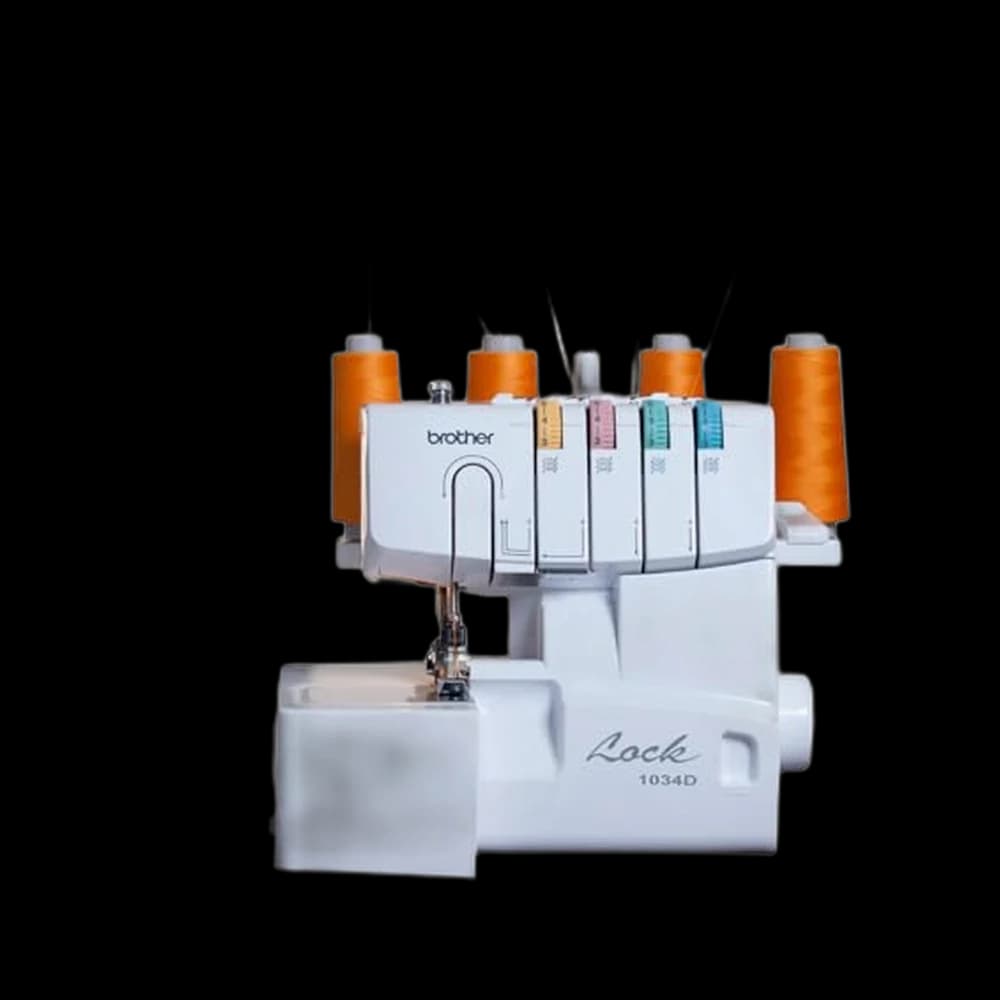 Sergers & Overlockers
Brother 1034D$319.99 4.2 out of 5 stars · 12,166 ratings
A first serger you can actually thread — colour-coded upper guide and lower looper threading, a metal frame, 3 or 4 threads, and by a wide margin the deepest owner-review record in this category.
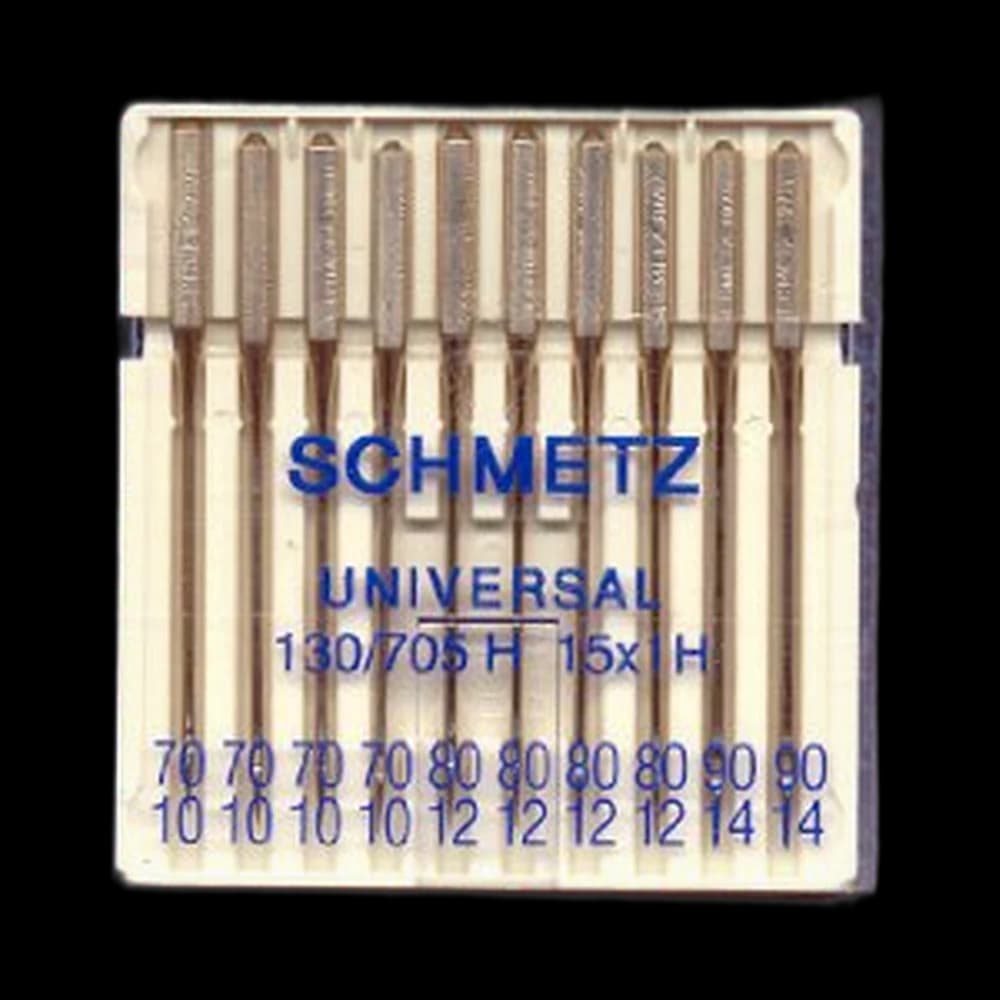 Machine Needles
SCHMETZ Universal 130/705$7.45 4.8 out of 5 stars · 709 ratings
Priced in the lower half of this category; universal points, the default for ordinary woven fabric.
Researched from listings, specs and owner feedback — never hands-on testing. We may earn a commission; it never changes a pick.
What a serger actually does
A serger — called an overlocker outside North America — does three jobs in one pass:
- Trims the raw edge of the fabric with a small blade, so the seam allowance is cut clean as you go.
- Sews the seam, using two, three or four threads instead of one.
- Wraps the cut edge in thread loops so it cannot fray.
That is the trick. On a sewing machine those are three separate operations: sew the seam, trim the allowance with scissors, then zigzag or bind the edge so it stops shedding threads in the wash. A serger does all three at once, at speed — the machines in our serger category are listed at 1,300 stitches per minute.
Why differential feed matters
It also handles stretch better, because of a control called differential feed. A serger has two sets of feed dogs under the foot, and differential feed lets them move at different speeds:
- Front set faster than the back — gathers the fabric slightly.
- Front set slower than the back — stretches it.
That is what stops a knit seam coming out wavy, and it is why people who sew t-shirts and leggings talk about sergers the way other people talk about dishwashers.
What a serger cannot do
This is the part the reviews skip, so read it twice before you spend $250.
- No zippers. There is a blade in front of the needle. It will hit the teeth.
- No buttonholes. No buttonhole stitch, no buttonhole foot, nothing.
- No topstitching. Topstitching is a visible line of straight stitching on the face of a garment. A serger has no straight stitch.
- No sewing in the middle of fabric. A serger works at an edge, because the blade wants an edge to cut. It cannot start a seam an inch in from the side of a panel.
- No unpicking, realistically. Undoing a four-thread overlock is genuinely miserable, and the fabric the blade cut away is gone. There is no putting it back.
- No basting, no free-motion, no darning.
So with a serger alone you cannot make a pair of jeans, a zip pouch, a shirt, a cushion cover with a zip, or a buttoned dress. What you can make:
- A t-shirt.
- A pair of leggings.
- A napkin with a rolled hem.
- Very tidy seam finishes inside garments you sewed on your other machine.
Rule of thumb: if you own one machine, it should be the one that does everything adequately rather than the one that does one thing beautifully.
Tidy insides are not a reason on their own, either: there are five seam finishes that need no serger, and every one of them works on the machine you already own.
When a serger earns its place
There are three honest triggers. If none of them describes you, wait.
You sew a lot of knits
T-shirts, leggings, pyjamas, baby clothes, sweatshirts. A sewing machine can sew knits perfectly well with a stretch stitch and a ballpoint needle, but every seam becomes two passes and the edges wave more than you would like. A serger turns a t-shirt from an evening into an hour.
You sell what you make
The inside of a handmade garment is what makes a buyer believe the price. Overlocked seams read as finished in a way pinked or zigzagged edges do not, and the time saved compounds across every unit you sell.
You have finished enough projects to be annoyed by the finishing
This is the truest signal of the three. Nobody who has sewn three things needs a serger. Someone who has sewn thirty and is bored of zigzagging every allowance is exactly the person it was built for.
That is why sergers sit at Level 3: Maker in The Pattern rather than anywhere earlier. Level 3 is where you are sewing garments people wear in public, and where a finished inside starts to matter to you.
The picks, and who each one is for
Sergers in this band are mechanically more alike than sewing machines are: nearly every one is a 2, 3 or 4-thread overlocker with adjustable differential feed running at 1,300 stitches per minute. What actually differs is how the machine threads, how much it weighs, and what the warranty says.
| Machine | About | The thing it is for |
|---|---|---|
| SINGER S0100 | $254 | Least expensive; arrives pre-threaded |
| SewLaVie 360 | $270 | Open threading area, 2-year warranty |
| Brother 1034D | $285 | 5-year limited parts warranty, most tutorials |
| SINGER HD0500S | $310 | Removable free arm for cuffs and sleeves |
SINGER S0100
The least expensive machine in the category, and the low-risk way to find out whether serging sticks. It offers 2, 3 or 4-thread stitching and adjustable differential feed for knits and sheers, and the listing says it arrives pre-threaded — which matters more than it sounds, because a threaded serger lets you tie new thread onto the old tails and pull it through rather than threading four paths cold.
At a listed 13.5 pounds it is lighter than the SewLaVie and the HD0500S, and mass is part of what keeps a machine steady on thick seams. If you already know you are heading for denim, spend the extra below.
SewLaVie 360
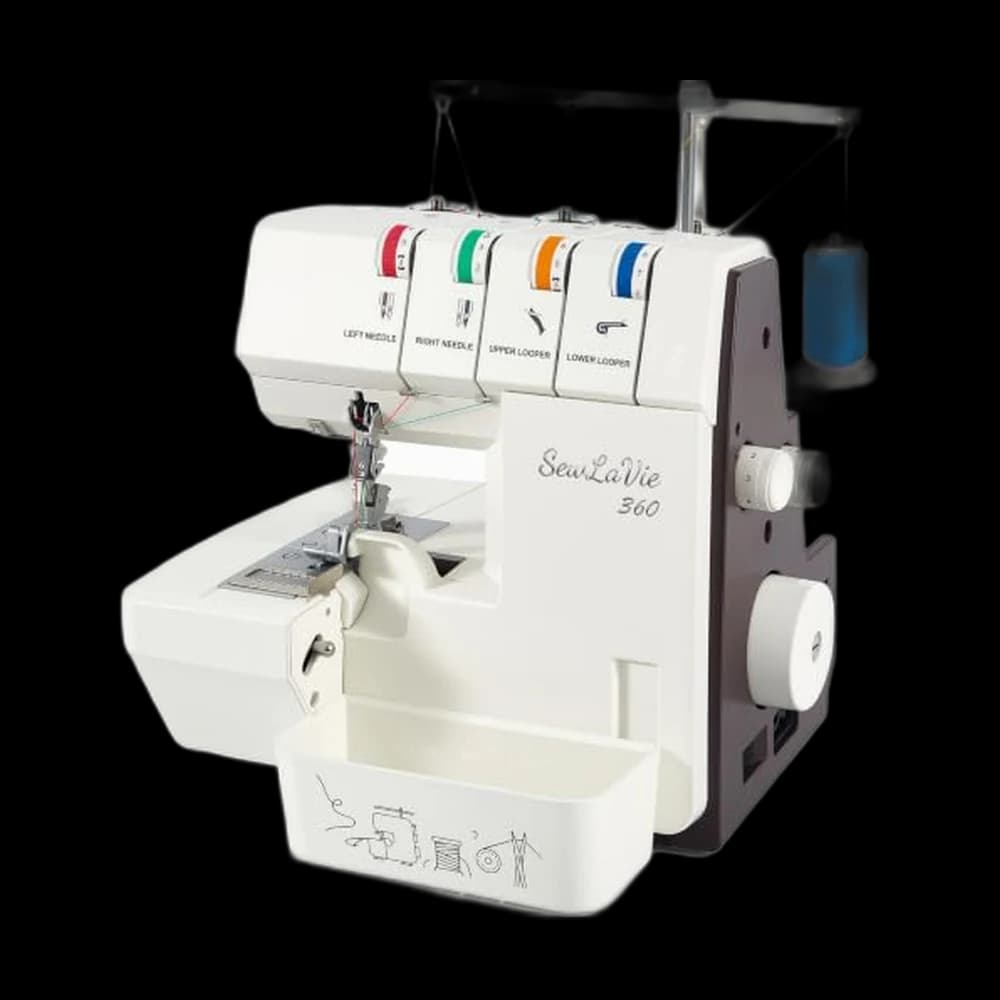
The one built around the actual barrier to serger ownership: threading. The listing describes a wide-open threading area with a visual alignment guide, so you can reach the loopers without dismantling anything. It also adds:
- A rolled hem function.
- Adjustable overlock width and stitch length.
- A large scrap bin.
- A 2-year manufacturer warranty — the second longest in this group.
If threading is the part you are afraid of, and for most people it is, look here first.
Brother 1034D
The machine most serger tutorials on the internet are filmed on. A 3 or 4-thread overlocker with a metal frame, colour-coded upper thread guides and a lower looper threading system, described by the listing as handling multiple layers of denim. Its warranty is the strongest here: 5 years limited parts, 90 days labour.
It sits mid-pack on price, so you are not paying a premium for the warranty or the sheer volume of tutorials filmed on it. Both are legitimate things to want.
SINGER HD0500S
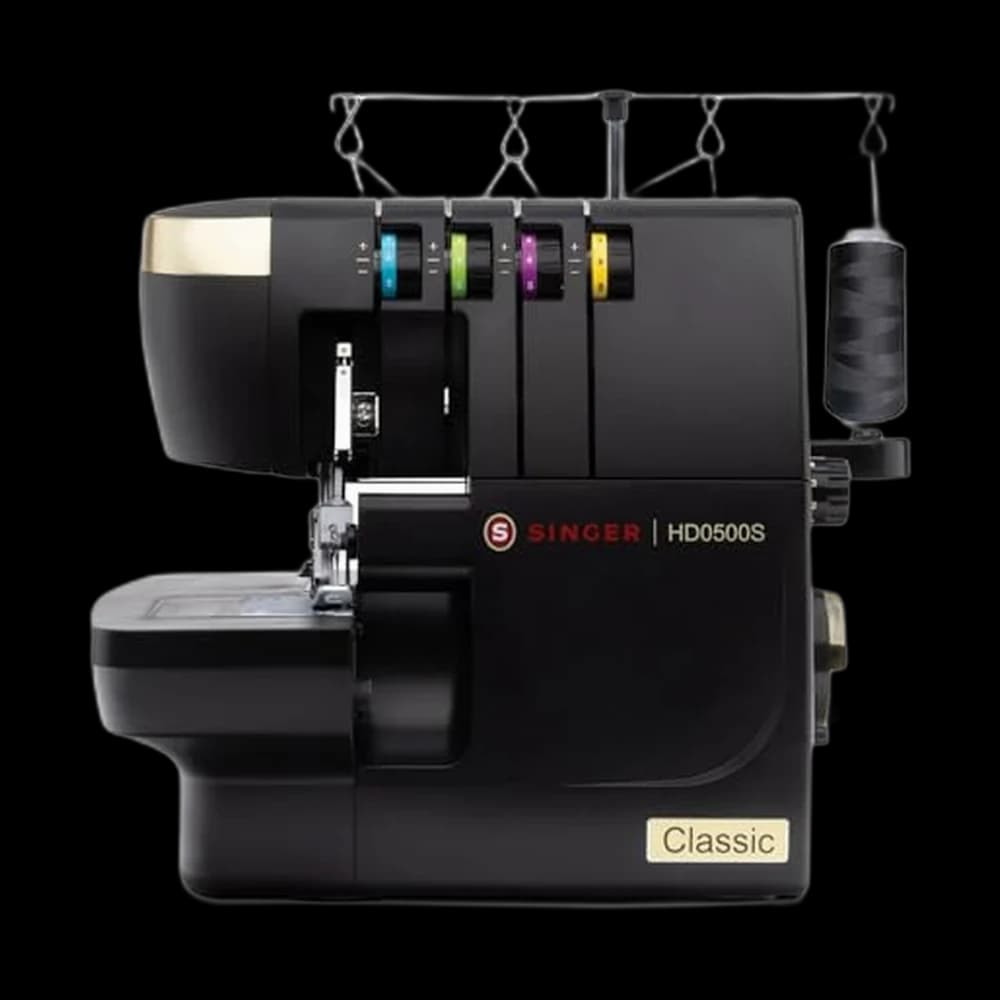
The one with a removable free arm, so cuffs, sleeves and any small tube go around the bed instead of fighting it. On knitwear that is a real advantage, because most of what you sew is a tube. It also has a heavy-duty metal frame, a lower looper LED and colour-coded thread paths, and 6 stitch types across 2, 3 and 4-thread setups.
If you are buying one machine, buy this instead
For a first machine the question is not serger versus sewing machine. It is which sewing machine — and our answer is Best Beginner Sewing Machines Under $250, or three questions in the Machine Finder if you would rather be asked than read. A machine that does straight stitch, zigzag and a buttonhole covers every project you will attempt in your first year, knits included, because a stretch stitch and a ballpoint machine needle will get you there.
Then, if you reach thirty finished garments and the finishing is what slows you down, come back to the serger category and buy one knowing exactly which of its limits you can live with.
Which serger to start with
When you do hit one of the three triggers and want one name rather than four, start with the Brother 1034D. It is the top pick in our serger category for reasons you can check:
- The deepest owner record. Its rating rests on more than twelve thousand Amazon reviews at 4.2 stars when we last checked, against a few dozen for the SewLaVie and none yet served for the HD0500S.
- The strongest warranty here. Five years limited on parts, 90 days on labour.
- Threading help on the machine. Colour-coded upper guides and a lower looper threading system.
Be honest with yourself about the trade. In that same review record, owners praise its ease of use and value, are mixed on threading and reliability, and some flag durability. The pattern in r/sewing and r/sewhelp threads asking which affordable serger to buy first matches: the 1034D is the name that keeps coming up, largely because so many tutorials are filmed on it, while some regulars argue that paying more buys easier threading.
Pick the SINGER S0100 instead if price decides it, or the SewLaVie 360 if threading is the part you dread. And if you are not sure you need a serger at all, the seam finishes that need no serger will tell you within a weekend.
Wonky seams are the whole point. Wonky seams finished twice as fast are a Level 3 problem.
Prices were last checked against our catalog on September 19, 2026 and move constantly. Confirm the live price before you buy.
Still deciding? Compare what each machine actually earns you.
Frequently asked
Do I need a serger?
Almost certainly not yet. A serger only finishes and seams edges, so it cannot make a garment on its own. Buy one when you already sew regularly, most of what you sew is knit, or you are selling what you make and the finishing time has become the bottleneck. Before that it will sit unused.
What is the difference between a serger and an overlocker?
Nothing. Serger is the North American name and overlocker is the name used in the UK, Australia and much of the rest of the world. They describe the same machine: two to four threads, a cutting blade in front of the needle, and a stitch that wraps the trimmed edge.
Can a serger replace my sewing machine?
No. A serger has no straight stitch, so it cannot topstitch, sew a zipper, make a buttonhole, baste, darn, or start a seam anywhere except at a fabric edge. You can make a t-shirt and some rolled hems with one, and very little else. It supplements a sewing machine rather than replacing it.
Can a normal sewing machine do overlocking?
Not true overlocking, which needs loopers and a cutting blade that a sewing machine does not have. What it can do is imitate the finish: a zigzag or three-step zigzag sewn over the raw edge, or an overcast stitch with an overcasting foot if your machine came with one, wraps the edge in thread and stops it fraying. It will not trim the edge as it sews, so the job takes two passes instead of one, and a stretch stitch handles knit seams.
Can I sew knits without a serger?
Yes. A stretch stitch or a narrow zigzag with a ballpoint needle sews knit seams that hold up fine in the wash. What you give up is speed and a bit of edge tidiness — a serger does the seam, the trim and the finish in one pass instead of two or three.
Is threading a serger as hard as people say?
It is the fiddliest part of owning one, because you are threading up to four paths through loopers rather than one. Machines address it differently: some arrive pre-threaded so you can tie new thread to the old tails and pull it through, and some use an open threading area with colour-coded paths and a lower looper light.
Prices and StitchScores reflect our most recent research and refresh on a cycle — confirm the live price before buying. We may earn a commission from affiliate retailers; it never changes what we recommend. See how we score gear.
Read next
Free Online Quilting Course for Beginners
A free, no-signup quilting course in eight lessons, from your first quarter-inch seam to a finished, bound 36-by-48-inch lap quilt, and the tools it needs.
Beginner Quilting Guide: A First Quilt, Start to Finish
What a quilt sandwich is, why your regular machine is enough, the rotary cutting trio, and how to piece, baste, quilt and bind a first baby quilt.