No-Sew Fleece Tie Blanket: Sizes, Yardage and Knots
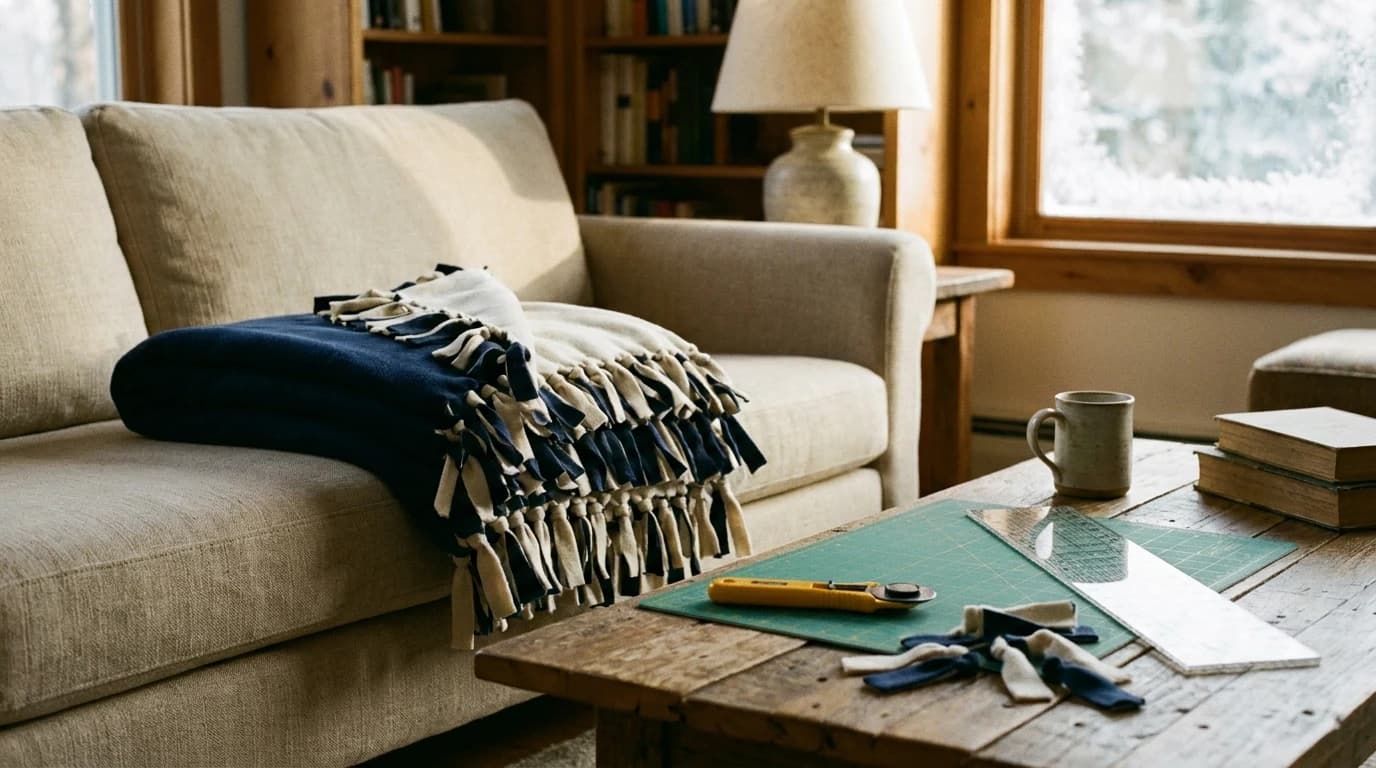
The short version
- Cut size is finished size plus 8 inches each way, since a 4-inch fringe takes 4 inches from every side.
- Fleece is commonly sold 58 to 60 inches wide. After trimming the selvages, plan on about 54 inches, which caps the solid center at around 46 inches.
- Width comes from the bolt and length sets the yardage: about 1¼ yards per layer for a toddler blanket, 1¾ for a child, 2 for a throw and 2½ for an adult length.
- Mark the fringe on masking tape, never on the fleece, and cut 1-inch strips up to the tape.
- Two-layer blankets tie a front strip to a back strip. A double overhand knot is the sturdy default; the slit-and-pull-through loop lies flattest.
- Tie firmly but not tight. If the blanket won't lie flat, loosen the knots.
- Keep tie blankets out of a baby's crib, per the American Academy of Pediatrics' safe-sleep guidance.
Buy each layer as one full-width piece of fleece and let the size you want set the length: 1¼ yards for a toddler blanket, 1¾ for a child, 2 for a throw and 2½ for an adult-length blanket. A two-layer blanket needs that amount twice, once in each color. Every row comes from one rule: add 8 inches to the finished size, because a 4-inch fringe uses 4 inches on every side.
No machine, no needle, and wonky fringe is completely fine. If you're working through what to make first, this is the one you can finish on the living-room floor in an evening.
How much fleece to buy, by blanket size
"Finished size" here is the solid center, not counting the fringe. Each yardage is for one layer.
| Blanket | Finished size | Cut size, each layer | Fringe strips | Yardage per layer | Knots to tie |
|---|---|---|---|---|---|
| Toddler | 36 x 45 in | 44 x 53 in | 1 x 4 in | 1¼ yd | 162 |
| Child | 45 x 54 in | 53 x 62 in | 1 x 4 in | 1¾ yd | 198 |
| Teen or throw | 45 x 60 in | 53 x 68 in | 1 x 4 in | 2 yd | 210 |
| Adult length | 45 x 80 in | 53 x 88 in | 1 x 4 in | 2½ yd | 250 |
The math, once. Cut size = finished size + 8 inches each way. The 53-inch side runs across the bolt, and the other side runs along it, which sets the yardage. For the throw: 60 + 8 = 68 inches, and 68 ÷ 36 = 1.89 yards, so buy 2. Knots are one per inch of solid edge: 2 x (45 + 60) = 210. The toddler row turns sideways on purpose: 44 inches along the bolt is 1¼ yards, where 53 would need 1½.
The first three sizes are the approximate sizes the Project Linus chapter in Montgomery County, Texas asks donors for, and its instructions give the same add-8-inches rule. The adult row is ours: 80 inches covers the 75-inch length of a twin mattress from our quilt size chart. The throw is a little narrower than the smallest lap quilt in that same chart, because the bolt allows no more.
Why every row stops at 45 inches wide
Width is decided by the bolt, not by you. Fabric Wholesale Direct lists its polar fleece at 58/60 inches wide, and both selvages have to come off. The Christian Community Service Center volunteer instructions (Houston) say that trim is usually no more than 2 inches a side, so plan on 54 inches at worst. Take away 8 inches of fringe and the widest solid center is 46 inches. The table uses 45 to leave an inch for a wobbly cut.
Check the bolt before the cutting counter. Read the width on the bolt end, and if both layers come from different bolts, make sure the widths match. That same Houston sheet asks volunteers to double-check it. Anything wider than about 46 inches means joining two widths, which is sewing.
What goes on the table
| Job | What to use | Why it fits this project |
|---|---|---|
| The two layers | Two full-width pieces of fleece, the same length | Jill's Blankets recommends anti-pill polar fleece for its no-sew blankets |
| Trimming the selvages | The Fiskars 45mm Rotary Cutter on a WORKLION 24" x 36" Self Healing Cutting Mat | Takes a long, straight edge off in one pass, and the large mat holds a folded length of fleece |
| A straight line to cut against | The Fiskars 6" x 24" Sewing & Quilting Ruler | Guides the cutter, and its gridlines measure out the 4-inch corner squares |
| No cutter at all | Proshear 9 Inch Tailor Scissors | The Project Linus instructions use nothing but sharp scissors |
| Holding the layers | MumCraft Multipurpose Sewing Clips, optional | The Houston sheet calls pinning the layers a personal preference; clips do that job at the edges |
| Marking the fringe | Masking tape, a marker and a 4-inch cardboard square | You mark the tape, never the fleece |
More choices: rotary cutters, cutting mats, quilting rulers and fabric scissors. Our rotary cutter vs scissors guide covers the trade-off.
Polyester fleece doesn't need prewashing for shrinkage; our prewashing guide has the fabric makers' figures.
What we'd buy for this
One pick per category, chosen from the research pages linked in this piece. Borrow before you buy — nothing here is required to start.
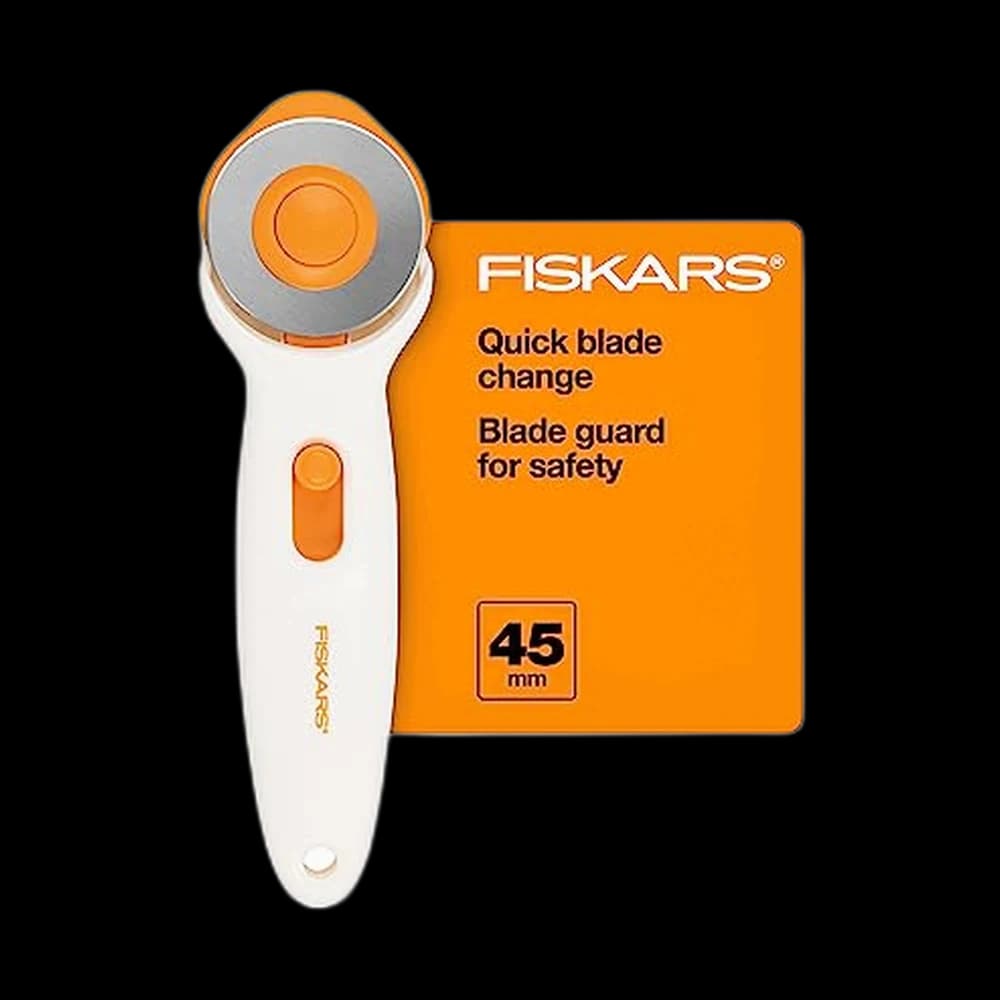 Rotary Cutters
Fiskars 45mm$10.98 4.6 out of 5 stars · 2,112 ratings
Priced in the lower half of this category.
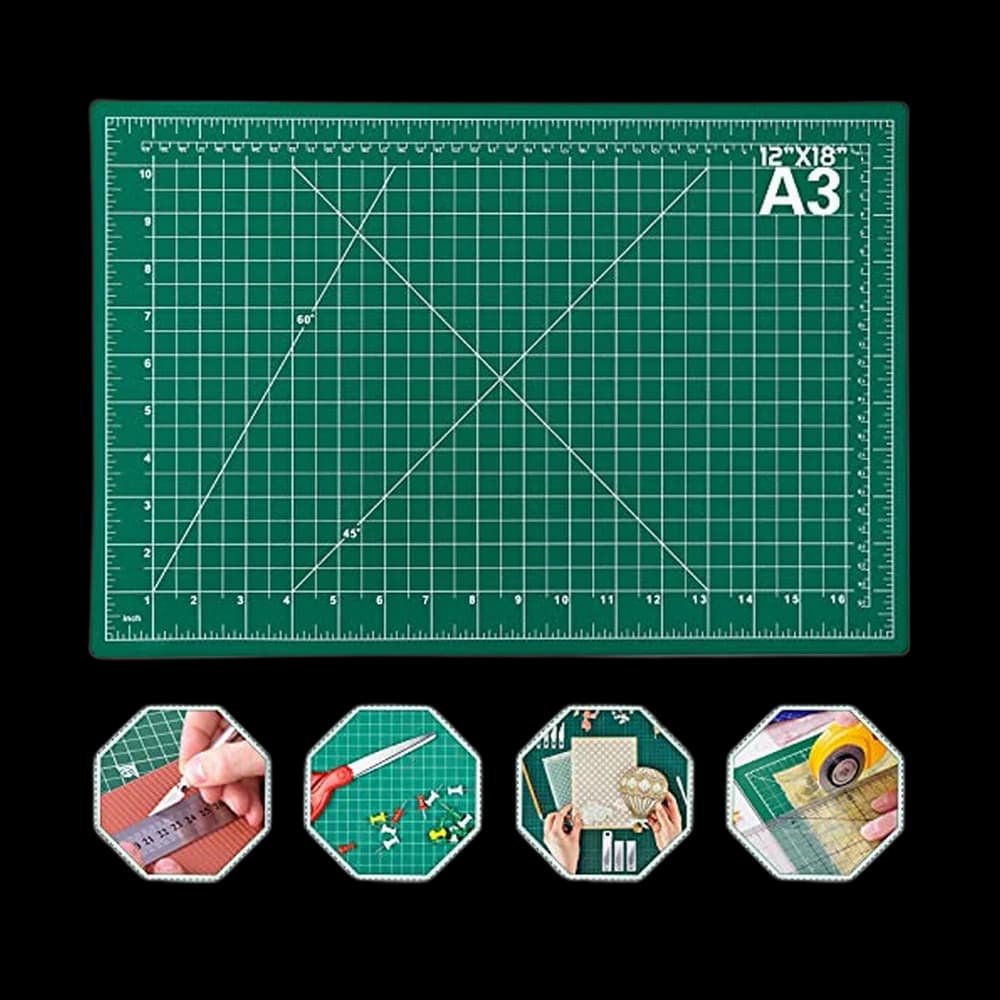 Cutting Mats
anezus 12inch$8.99 4.6 out of 5 stars · 21,006 ratings
The least expensive pick in this category, which makes it the low-risk way to find out whether you'll keep at it; the surface is self-healing, so rotary cuts close up instead of scarring into a groove that steers your next cut.
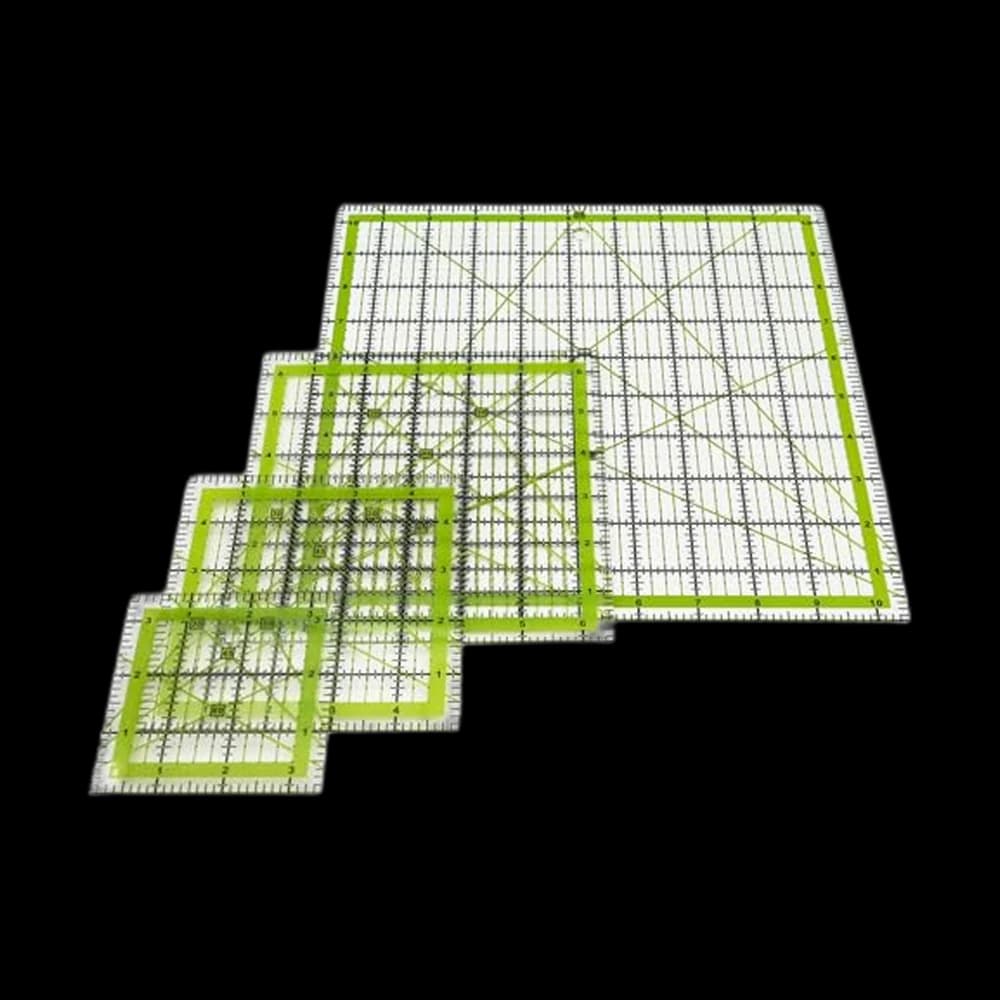 Quilting Rulers
LINXIAO$9.99 4.8 out of 5 stars · 1,141 ratings
Researched from listings, specs and owner feedback — never hands-on testing. We may earn a commission; it never changes a pick.
Cutting the fringe, in six steps
- Find the right side. Stretch the selvage: Jill's Blankets notes it curls up toward the right side of the fleece.
- Trim the selvages in a straight line, then lay the two layers wrong sides together and trim until all four edges match.
- Cut a 4-inch square from each corner, through both layers, using the cardboard template.
- Lay tape between two corner cut-outs and mark it every inch. The Project Linus instructions say to mark the tape, never the fleece.
- Cut from the edge up to the tape at each mark, so every strip is 1 x 4 inches.
- Move the tape to the next side and repeat all the way around.
Want a longer fringe? The Houston sheet cuts 5-inch squares for longer fringe and doesn't recommend it for a baby or toddler blanket. Add 10 inches instead of 8, and the widest solid center drops to 44 inches.
Four ways to finish the fringe
| Method | Layers | How it's done | What the source says |
|---|---|---|---|
| Single knot | One | Tie each strip on itself, halfway down | Project Linus: not too tight, not at the base, never two strips together |
| Double overhand | Two | One front strip plus one back strip, knotted close to the edge, then knotted again | Christian Community Service Center: two tight knots should hold through the washer and dryer |
| Square knot | Two | Right over left, then left over right | Jill's Blankets: don't tie the knots too tight |
| No-knot loop | Two | Cut a small slit in each strip and pull the strip ends through it | Crafts by Amanda: pull snug but gently, because fleece stretches, and it lies flat |
The double overhand is the sturdy default for a blanket that will be washed a lot. The no-knot loop gives the flattest edge.
A few habits make any method look tidier:
- Do: tie every other pair all the way round, then flip the blanket and tie the rest from the back, so neither side reads as the back. Not: tying every pair from the front.
- Do: go easy on the two stretchy selvage sides, as the Houston sheet warns. Not: tugging those strips until they thin out.
- Do: spread the finished blanket on a table and check that it lies flat. Not: leaving it bunched; Project Linus says to loosen the knots if it doesn't.
Making one with kids, or as a gift
Split the work by the tools: an adult does the rotary cutting, and kids do the knots, which need no needle and no machine. The knot count in the table tells everyone up front how big the job is, and a toddler blanket is the shortest one.
Not for a baby's crib. The American Academy of Pediatrics' safe-sleep guidance says to keep blankets out of a baby's sleep space. A toddler-size tie blanket is for laps, strollers and the sofa.
For gifting, fold the blanket in thirds lengthwise and roll it. Want to keep going? The beginner sewing kit is the short list of tools for your first project that does need a needle.
Frequently asked
How much fleece do I need for a tie blanket?
Add 8 inches to the finished size you want, then divide the length by 36 and round up. That gives about 1¼ yards per layer for a 36 x 45 inch toddler blanket, 1¾ for a 45 x 54 child blanket, 2 for a 45 x 60 throw and 2½ for a 45 x 80 adult-length blanket. A two-layer blanket needs that amount in each of two fabrics.
How big should the corner squares be on a fleece tie blanket?
Cut the corner squares the same size as your fringe is long. Most instructions, including Project Linus, use 4-inch squares for a 4-inch fringe. For a longer fringe cut 5-inch squares and add 10 inches to the finished size instead of 8.
How wide should the fringe strips be?
About 1 inch wide and 4 inches deep. Mark the inches on masking tape laid across the fleece, not on the fleece itself, and cut from the edge up to the tape.
Can you make a tie blanket bigger than 46 inches wide?
Not from a single width of standard fleece. Fleece is commonly 58 to 60 inches wide, and after the selvages are trimmed and 4 inches of fringe come off each side, the solid center tops out around 46 inches. Wider than that means joining two widths, which needs sewing.
Do fleece tie blankets come apart in the wash?
Knotted well, they hold. The Christian Community Service Center's volunteer instructions in Houston say two tight overhand knots, pairing a front strip with a back strip, should hold through washer and dryer cycles. Tie firmly without pulling so hard that the blanket bunches.
Can you make a fleece blanket without tying knots?
Yes. Cut a small slit in each pair of strips, feed the strip ends through the slit and pull them snug but gently, since fleece stretches. The edge lies flatter than a knotted one.
Prices and StitchScores reflect our most recent research and refresh on a cycle — confirm the live price before buying. We may earn a commission from affiliate retailers; it never changes what we recommend. See how we score gear.
Read next
Beginner Sewing Projects: What to Make, in Order
The full run of beginner sewing projects in order, from a hand-sewn button to a lined jacket, with what each one teaches and how long it honestly takes.
Should You Prewash Fabric? How Much Cotton Shrinks
Fabric makers' own shrinkage figures by fiber, when to prewash and when to skip it, how to handle precuts and dye bleed, and a swatch test for your fabric.