Embroidery Stabilizer Guide: Which Type for Which Fabric
Our picks, at a glance
- Top pick
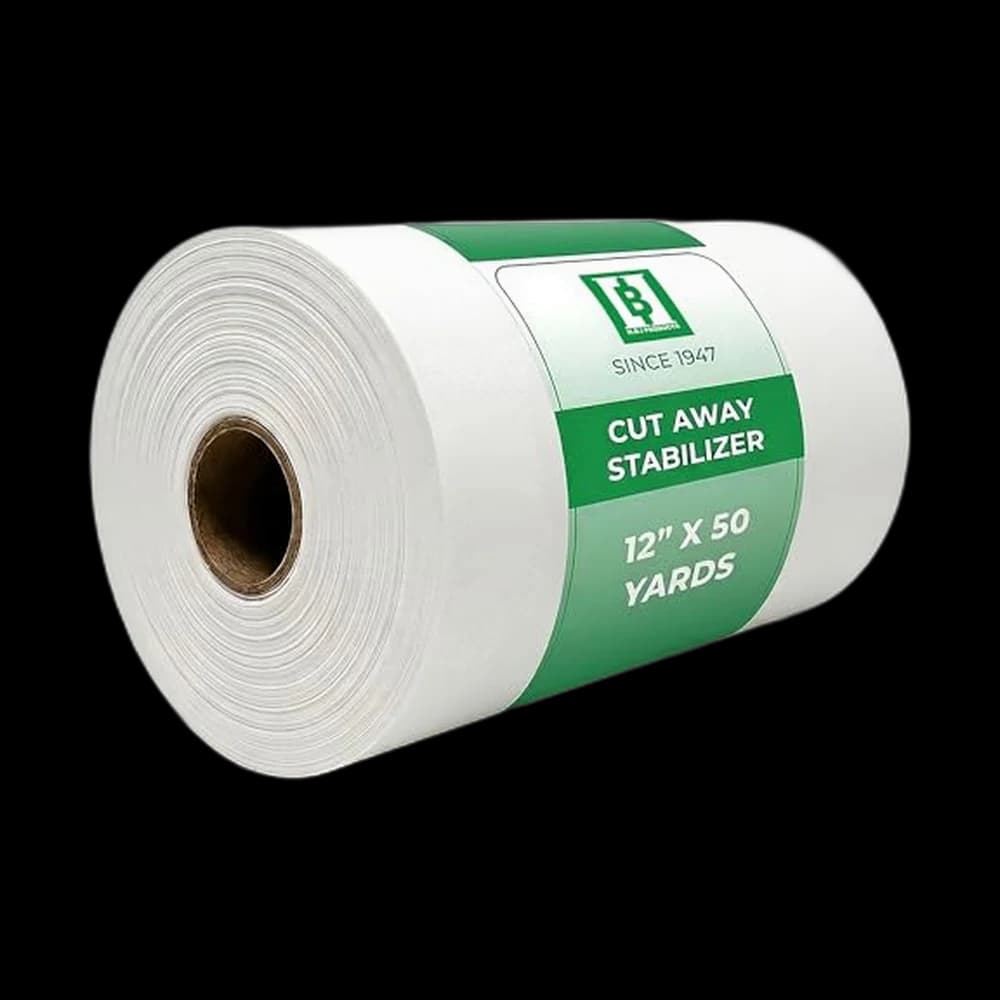
New brothread Cut Away Stabilizer, 50 Yd Roll
$25.99StitchScore 84 4.8 out of 5 stars · 5,530 ratings
- #2
New brothread Tear Away Stabilizer, 100 Sheets
$9.99StitchScore 91 4.8 out of 5 stars · 14,514 ratings
The short version
- Ask four questions in order: does it stretch, will it be washed and worn, is it sheer, does it have a pile. The first yes usually picks the stabilizer.
- Cut-away for knits and anything worn and washed; tear-away for firm wovens under light designs; water-soluble for sheers and as a topping on pile.
- Stabilizer makers disagree on towels, denim, canvas and leather. Break the tie by asking whether the item will be stretched or laundered often.
- Weight names are not comparable between brands. One maker's medium tear-away is 1.5 oz; another's medium cut-away is 2.5 oz.
- Puckering usually means stretched hooping or too little stabilizer; gaps between fill and outline usually mean tear-away perforated to nothing.
The name on the roll — cut-away, tear-away, wash-away — describes how the stabilizer leaves. It does not tell you which one your project needs. The fabric does, and it answers in a few predictable ways.
If you are new to the five parts of an embroidery setup, start with machine embroidery for beginners, which covers the four families in one table. This guide goes a layer down: fabric by fabric, by weight, the cases where the stabilizer makers themselves disagree, and what to do when a stitch-out puckers anyway.
Four questions that pick it for you
Ask them in order. The first yes usually decides.
- Does the fabric stretch? T-shirts, sweatshirts, fleece and stretch denim want cut-away, which stays behind the stitches for good. Embroidery Library's t-shirt guide says to avoid tear-away on t-shirts because it leads to shifting, gapping and misalignment.
- Will it be worn and washed for years? Sulky's cut-away and tear-away guide puts the familiar failure plainly: designs that "wad up" after washing are what a permanent cut-away prevents.
- Is it sheer, or will the back be seen? Use a backing that disappears in water, or a light mesh that does not show through.
- Does it have a pile? Towels, fleece, velvet and corduroy also need a water-soluble topping on the right side, so the stitches sit on the loops instead of sinking into them.
If all four answers are no — a firm woven that will not be laundered hard — tear-away is fine. When you are unsure, cut-away is the safer mistake: it costs a slightly stiffer back, not a ruined design.
Fabric by fabric
| Fabric | Backing | Topping | Who says so |
|---|---|---|---|
| T-shirt jersey | Light cut-away or no-show mesh | No | Embroidery Library, Sulky |
| Sweatshirt, fleece | Heavier cut-away | Yes on fleece | Sulky, OESD, Embroidery Library |
| Towel, terry | Disputed — see below | Yes, always | Sulky, OESD, Madeira |
| Denim | Disputed — see below | No | — |
| Canvas, twill | Disputed — see below | No | — |
| Quilting cotton | Tear-away for a light design, cut-away for a dense one | No | Embroidery Library, Baby Lock |
| Organza, chiffon | Heavy water-soluble as the only backing | No | Embroidery Library, OESD |
| Vinyl, faux leather | Sticky stabilizer, or cut-away with spray | No | Sulky, Embroidery Library |
| Freestanding lace | Fibrous water-soluble, not film | — | Brother, Embroidery Library |
Two rows deserve a sentence. On organza, Embroidery Library's organza guide notes that most stabilizers show through a sheer, so the whole backing is water-soluble. On vinyl, Sulky's vinyl guide says the surface should not be clamped in the hoop at all: hoop a sticky stabilizer drum-tight and press the vinyl onto it.
Where the makers disagree
Read enough manufacturer advice and you will find it contradicts itself on four common fabrics. This is the table nobody else prints.
| Fabric | Says cut-away | Says tear-away | Our tie-break |
|---|---|---|---|
| Towels | Embroidery Library | Sulky (two layers plus a topper), OESD | Cut-away for a dense design on a towel that is washed hot; tear-away plus topping for a light monogram where the back shows |
| Denim | Embroidery Library, OESD | Madeira | Cut-away for anything worn, especially stretch denim; tear-away on a rigid denim tote |
| Canvas | Embroidery Library | OESD, Madeira | Tear-away under a light design; cut-away under a dense fill |
| Leather, vinyl | Embroidery Library (faux leather) | OESD, Sulky (sticky, unhooped) | Do not clamp the surface itself; use sticky stabilizer |
The tie-break is our reading, not a manufacturer rule, and it reduces to one question: will this item be stretched or laundered often? If yes, the cut-away camp wins.
Weight: "medium" means nothing between brands
Madeira sells a 1.5 oz tear-away and calls it medium weight. Embroidery Library's medium cut-away is 2.5 oz. OESD's stabilizer guide skips ounces and sorts by job: lightweight tear-away for low stitch counts, heavyweight cut-away for "large or stitch-intensive designs" on denim, sweatshirt fleece and heavy knits.
Compare ounces where the roll prints them, not the word. Two "medium" rolls can be a full ounce apart. For t-shirts, Embroidery Library's cut-away tips uses 2 to 2.5 oz.
Mesh, toppings and the sticky kind
No-show mesh
A light, soft cut-away for thin and light-coloured knits. OESD describes its PolyMesh as preventing show-through on thinner fabrics while staying strong enough for knits.
Toppings
A clear water-soluble film laid on top of the fabric. Sulky's water-soluble guide names its main job: stopping towel loops and pile poking up through the stitching.
Sticky stabilizer and spray
Sticky backing is for items too small or awkward to hoop. Sulky's method: hoop it, score the release paper with a pin, peel, press the item down. Sulky also advises removing its Sticky+ within about an hour, and its staff warn it is too strong for delicate fabrics.
Hoop it or float it?
The sources split again. Embroidery Library's broadcloth guide says to hoop fabric with one piece of stabilizer and not to float any, warning that it dulls the needle. Sulky floats an extra layer or two underneath "just in case". Madeira's hooping guide hoops only the backing for satin and lycra, holding the fabric on with spray or a sticky backing.
For a first year, hoop fabric and stabilizer together. Floating is a fix for items that will not go in a hoop, not a shortcut.
Getting it off afterwards
- Tear-away: Madeira says to start at points and corners and tear from the outer edge in towards the design. With more than one layer, Sulky tears them one at a time.
- Cut-away: trim, leaving about half an inch around the design, per Embroidery Library. Do not cut the empty areas inside the design — it lets the fabric twist.
- Water-soluble: Sulky's Solvy FAQ says it dissolves anywhere from 32 to 200°F, and its staff suggest cool water and air drying when shrinkage is a worry. Brother and OESD say warm and lukewarm. Cool is the safe choice for a garment.
- Heat-away: Sulky's version disintegrates when ironed, for fabric you cannot wet, such as burlap.
When it still puckers
| What you see | Usual cause | Fix |
|---|---|---|
| Puckering round the design | Fabric stretched in the hoop, or too little stabilizer | Re-hoop snug, not stretched; go heavier or cut-away |
| Puckering with good hooping | Thread tension | Check the back: about a third bobbin, two-thirds top thread |
| Gaps between fill and outline | Tear-away perforated to nothing | Switch to cut-away; check nothing blocks the hoop |
| Design wads up after washing | Temporary backing on a worn item | Cut-away next time |
| Stitches vanish into a towel | No topping | Add water-soluble film on top |
Sulky's puckering answer blames stabilizing and hooping first. Madeira's puckering guide leads with tension and gives the third-to-two-thirds check. Embroidery Library's gapping guide explains the outline problem: each needle hole weakens tear-away until nothing supports the fabric.
What to buy first
Two rolls cover most first-year projects: a cut-away and a tear-away from the stabilizer shelf. The New brothread cut-away roll is 10 inches wide, which its maker sizes for 4x4 and 5x7 hoops, and the New brothread tear-away sheets handle canvas and cotton. The sticky water-soluble sheet on that shelf is a printable transfer its maker pitches at hand embroidery, not the clear film topping a towel needs.
Add a topping when your first towel arrives. Then read machine appliqué, where the stabilizer under the base fabric matters as much as the fabric on top.
What we'd buy for this
One pick per category, chosen from the research pages linked in this piece. Borrow before you buy — nothing here is required to start.
 Embroidery Stabilizer
New brothread 100$9.99 4.8 out of 5 stars · 14,514 ratings
Priced in the lower half of this category.
Researched from listings, specs and owner feedback — never hands-on testing. We may earn a commission; it never changes a pick.
Frequently asked
What is the best stabilizer for machine embroidery on t-shirts?
A light cut-away or no-show mesh. Embroidery Library advises against tear-away on t-shirts because it leads to shifting, gapping and misalignment, and uses 2 to 2.5 oz cut-away. Mesh is the choice when the shirt is light-coloured, because it does not show through.
Can I use tear-away stabilizer on towels?
Some makers say yes and some say no. Sulky uses two layers of tear-away plus a water-soluble topping; Embroidery Library prefers cut-away in most cases. For a dense design on a towel that will be washed hot, cut-away is the safer choice. Use a topping either way.
What water temperature dissolves water-soluble stabilizer?
Sulky says its Solvy dissolves anywhere from 32 to 200 degrees Fahrenheit, and suggests cool water and air drying when shrinkage is a worry. Other makers say warm or lukewarm. For a garment, cool water is the safe choice.
Should I float stabilizer under the hoop?
Not as a habit. Embroidery Library says to hoop fabric and stabilizer together and not to float. Sulky floats extra layers as insurance. Floating is a fix for items too thick or awkward to hoop, not the way to learn.
Sources & further reading
Where our guidance rests on a fact, here is where that fact comes from.
- Sulky — Stabilizer basics: cut-away and tear-away — Permanent versus temporary backing, t-shirts and sweatshirts, floating extra layers, Sticky+ method.
- Sulky — Stabilizer basics: water-solubles and heat-away — Toppings on napped fabric and heat-away for fabric that cannot get wet.
- Sulky — What are Solvy and Super Solvy? — Dissolves in water from 32 to 200 degrees Fahrenheit.
- Sulky — How to keep embroidery from puckering — Puckering traced to stabilizing and hooping.
- Sulky — Machine embroidery on vinyl — Hoop sticky stabilizer, not the vinyl itself.
- OESD — Stabilizer guide (PDF) — Weights by job, tear-away for towels and canvas, PolyMesh and toppings.
- Embroidery Library — Embroidering on t-shirts — Avoid tear-away on t-shirts.
- Embroidery Library — Cutaway stabilizer tips and tricks — 2 to 2.5 oz on t-shirts; do not cut inside the design.
- Embroidery Library — Embroidering on organza — Heavy water-soluble as the only backing on sheers.
- Embroidery Library — Embroidering on broadcloth — Hoop one piece of stabilizer; do not float.
- Embroidery Library — 4 tips to avoid gapping — Why outlines gap from fills.
- Madeira — E-Zee Tear 1.5 oz — A 1.5 oz tear-away described as medium weight; tearing from the outer edge in.
- Madeira — Correct hooping for best embroidery results — Hooping only the backing for satin and lycra.
- Madeira — How to avoid puckering during embroidery — Tension check: a third bobbin, two-thirds top thread.
Prices and StitchScores reflect our most recent research and refresh on a cycle — confirm the live price before buying. We may earn a commission from affiliate retailers; it never changes what we recommend. See how we score gear.
Read next
Magnetic Embroidery Hoops: Do You Need One, and Which Fits
What a magnetic embroidery hoop changes and what it does not, which frames fit common Brother, Baby Lock and Janome machines, and the safety rules.
Machine Embroidery Appliqué: Step by Step, Stop by Stop
How appliqué works on an embroidery machine: what each colour stop asks you to do, trim-in-place versus pre-cut, fusible web, and how close to trim.